





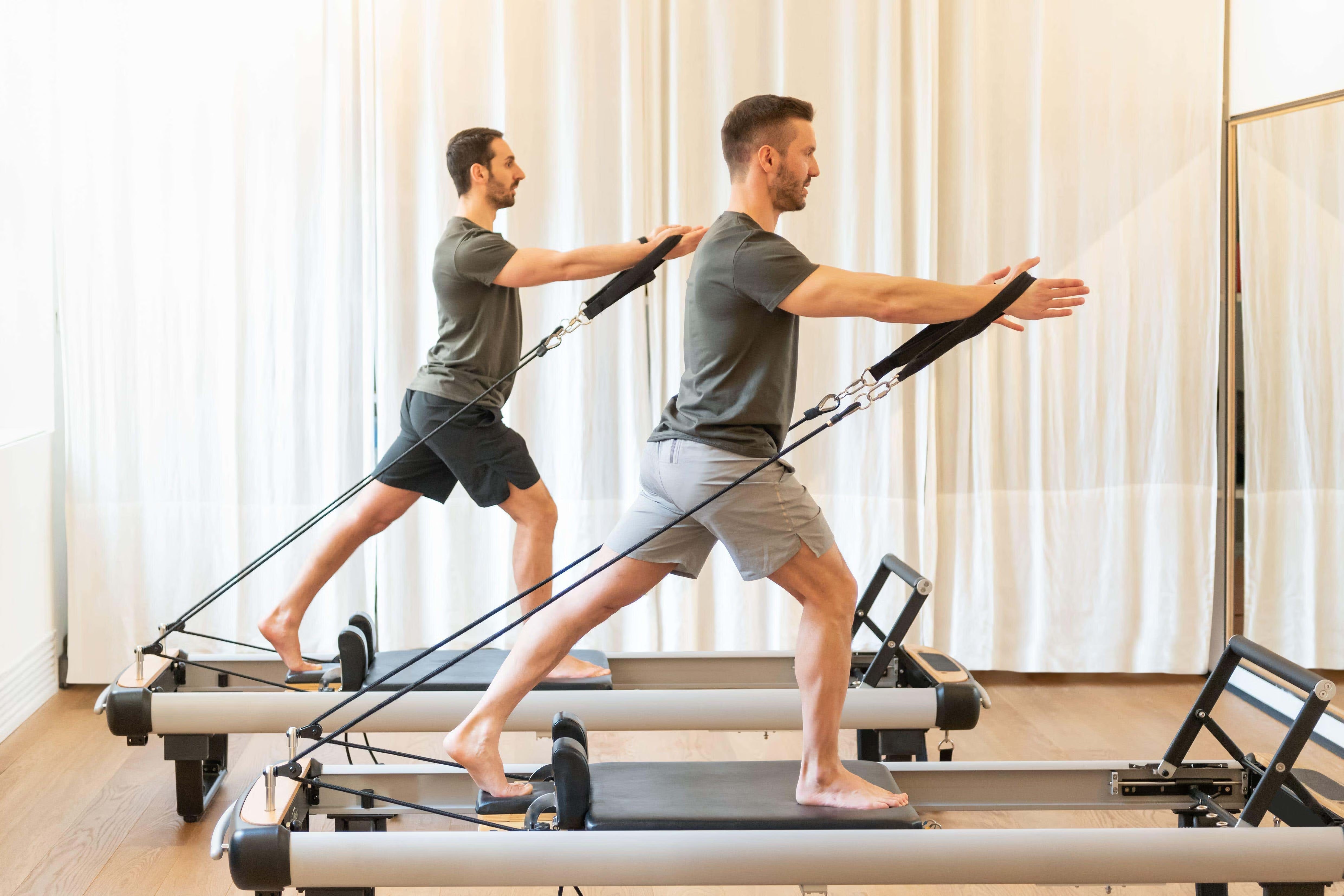
Pilates For Men Over 40
Most men I talk to about Pilates arrive with the same 2 things. A body that has been trained hard for 20 years, and a list of parts that have started complaining about it.
That combination is exactly what the reformer is good for, and it is a completely different conversation from the one the marketing usually has with men. This is not about trying something gentler. It is about the specific things that stop working around this age and what actually addresses them.

In this article
What actually changes after 40
Four things, and none of them are dramatic on their own.
You lose range before you lose strength. Most men in their forties can still move respectable weight. What they cannot do is get into the positions they used to move it from, which is why the same lifts start to feel awkward rather than heavy.
Recovery stops being free. In your twenties you trained through things. Now a session you have not recovered from becomes 3 days of moving badly, and moving badly is where most injuries start.
The small muscles quietly stop showing up. Years of training big, symmetrical, forward facing movements means your stabilisers have been carried rather than trained. They do not fail in the gym. They fail when you turn awkwardly carrying something.
Sitting starts to win. Hip flexors shorten, glutes switch off, the upper back rounds. It is not age, it is hours, and it compounds.
What the reformer addresses
Strength at end of range. Springs get harder the further they stretch, so the load peaks where the muscle is longest. That is the exact position most men are weakest in and the one where things tear.
The stabilisers. The carriage moves, so every exercise is also a control task. Muscles that have been passengers for 20 years have to start working, and they are usually furious about it for the first fortnight.
Hips and thoracic spine. The 2 areas that shut down from sitting, both loaded directly and repeatedly in almost every reformer session.
Single leg and single arm work. A barbell lets your strong side carry your weak side indefinitely. A reformer does not, and the asymmetries it surfaces in the first session are usually a surprise.
Training without adding damage. No impact, no load on the spine, and resistance you can dial down to nothing. It is training you can do on the days your body cannot take another heavy session.
It is harder than you think
I will be blunt about this, because it is the single biggest misconception and it is the reason men skip it.
Strong men have a difficult first session. Not because the load is high, but because the load is in places nothing has asked before, at speeds that remove every bit of momentum you normally rely on. Slow single leg work on a light spring will make a hip shake within 20 seconds in someone who squats comfortably.
That is not a sign you are unfit. It is a sign the machine found the gap, which is the entire reason to be on it.
If you still lift
Keep lifting. The reformer is not a replacement, and I would not want it to be.
Two weight sessions a week covering the big patterns, and 2 reformer sessions covering everything a barbell ignores. Rotation, single side work, end range strength, deep core. Do not do both hard on the same day, and if you must, lift first.
The reformer session on the day after a heavy one is the most useful one there is. Light springs, full range, slow. It moves blood through tired muscle without adding fatigue, and it does more for how you feel on day 2 than any recovery product you can buy.
I compared the 2 forms of training properly in reformer Pilates versus weight training.

If you stopped training years ago
Then the reformer is a better starting point than a gym, and I say that as someone with no particular loyalty to either.
You are supported the whole time. The resistance starts at almost nothing. There is no technique you can get catastrophically wrong, no weight to drop, and no impact on knees that have not been asked to do anything in a decade. You can also do it at home, which removes the part that actually stops most men, which is walking into a gym feeling like the least capable person in it.
Expect to feel something within 2 weeks in your back and your posture. Expect visible change to take a few months, the same as anything else that works.
What a week looks like
- Three reformer sessions, 40 minutes, full body. Not split routines. At this frequency everything needs to be trained every time.
- Heavier springs than you assume. The default settings in a class are set for a room, not for you. If you can hold a conversation through a set, add a spring.
- Slow down the return. Three seconds on the way back, every repetition. This is where the work is and it is the half most men give away.
- Walk on the other days. Unglamorous, and it does the part of the equation the reformer does not.
- Write down your springs. Same reason you log lifts. Without it you will train at the same setting for 6 months and conclude the machine does not work.
Starting without embarrassing yourself
Two or 3 studio classes first if there is one near you, ideally a beginner one. Not because you need permission, but because someone watching your ribs and your hips for an hour will catch things you cannot.
After that, home is where it actually happens. The honest reason most men do 1 session a week instead of 3 is not motivation, it is the drive, the timetable and the cost per class. A machine in the garage or the spare room removes all 3.
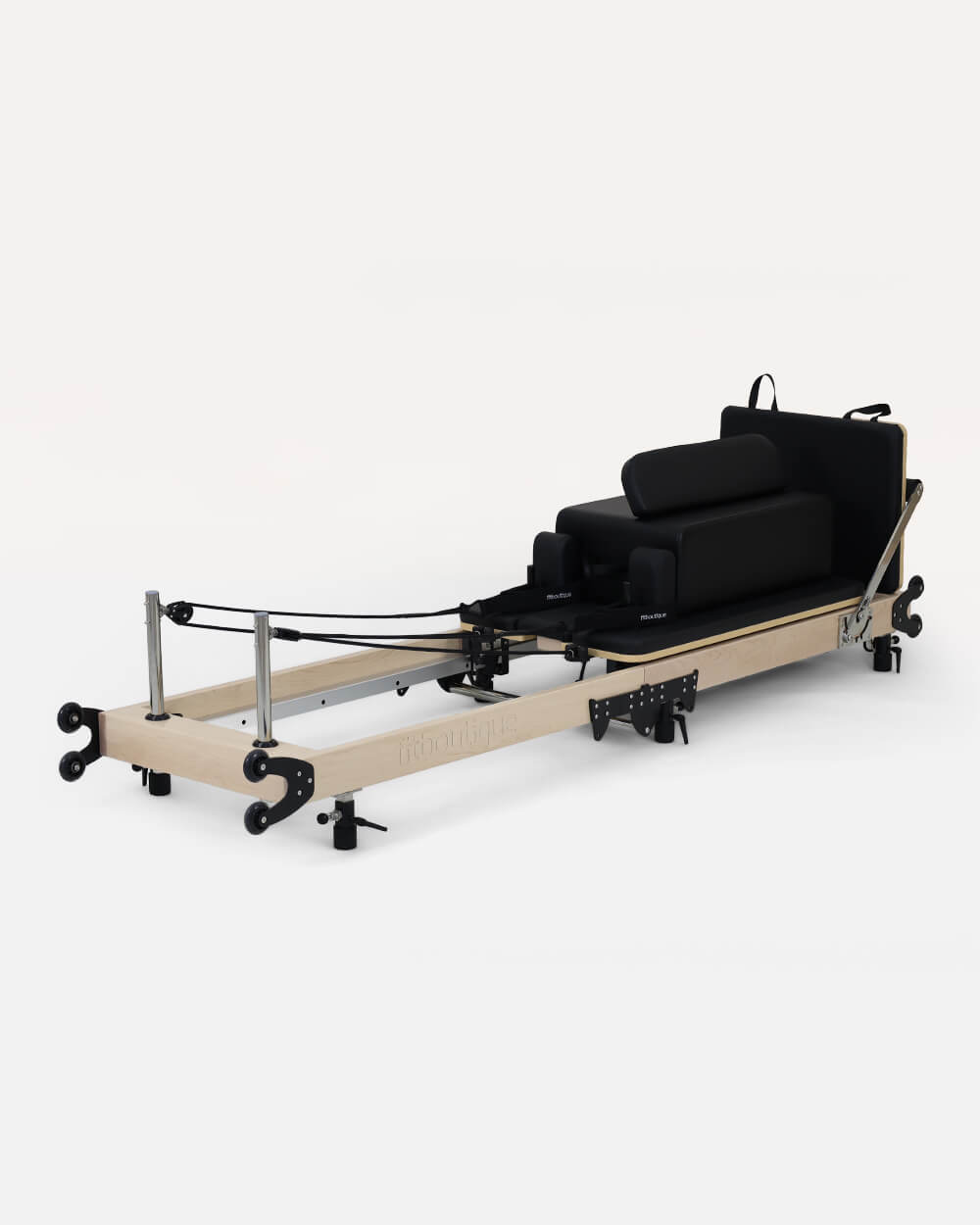
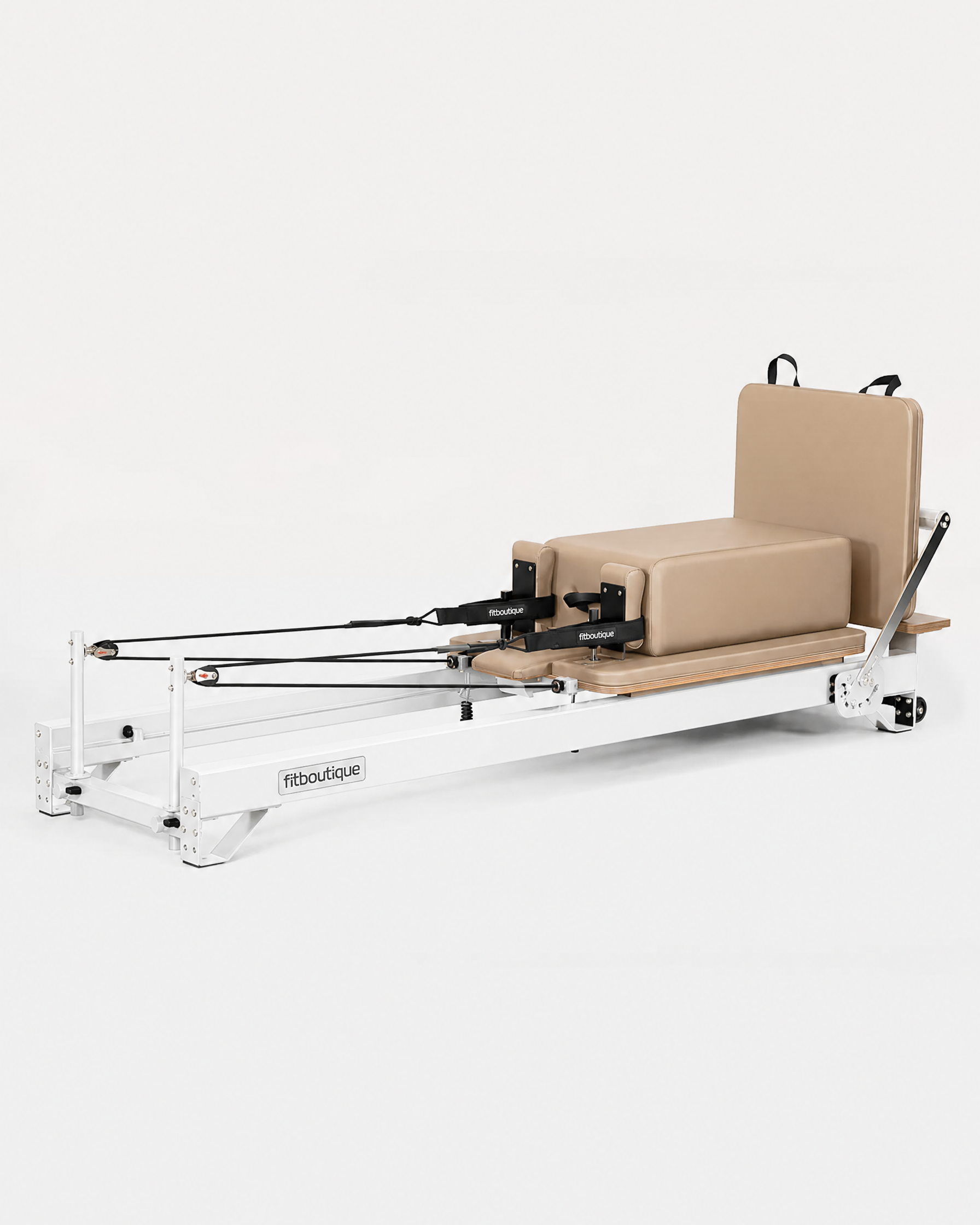
Setting one up takes about 2 minutes. This is the folding model, start to finish.
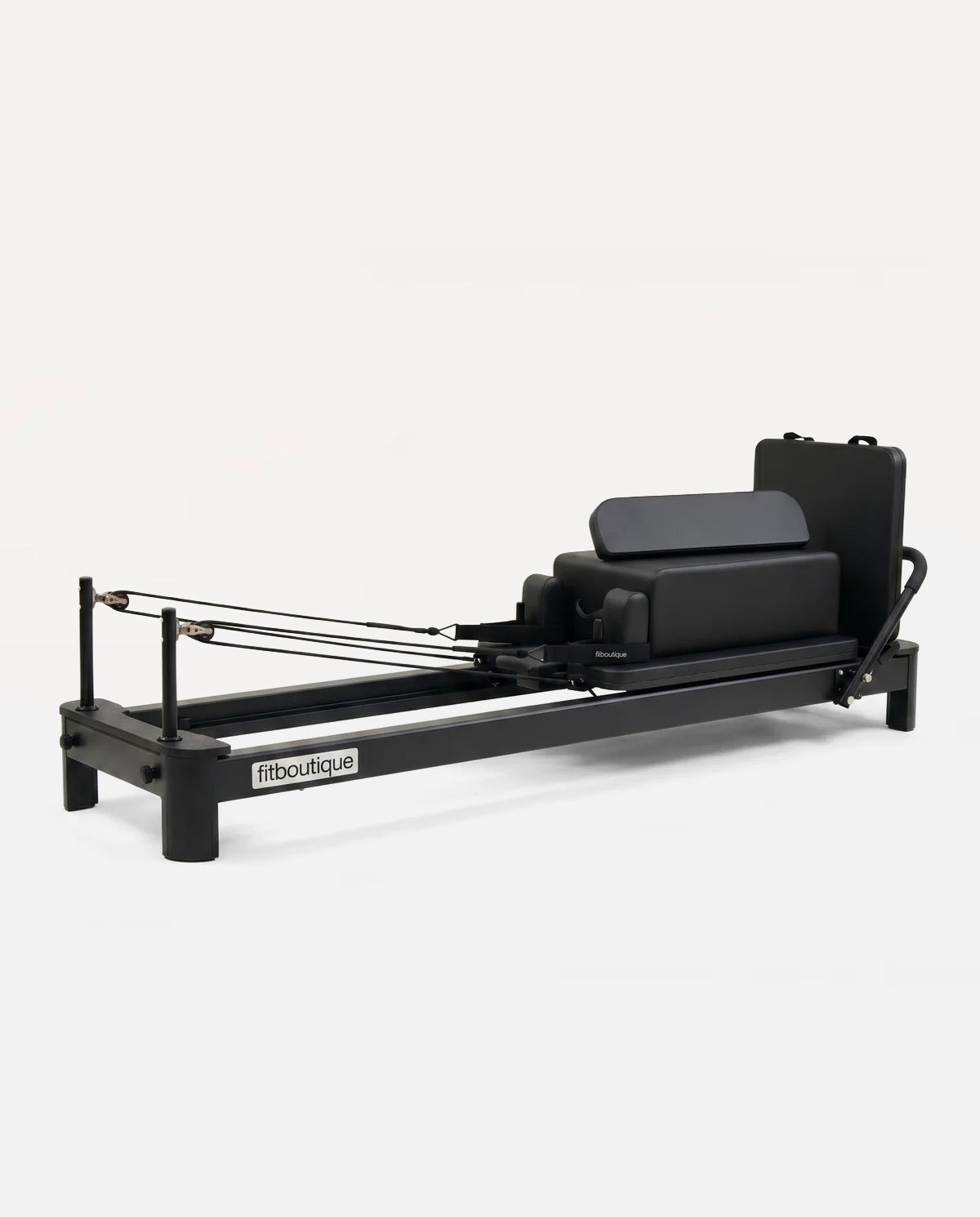
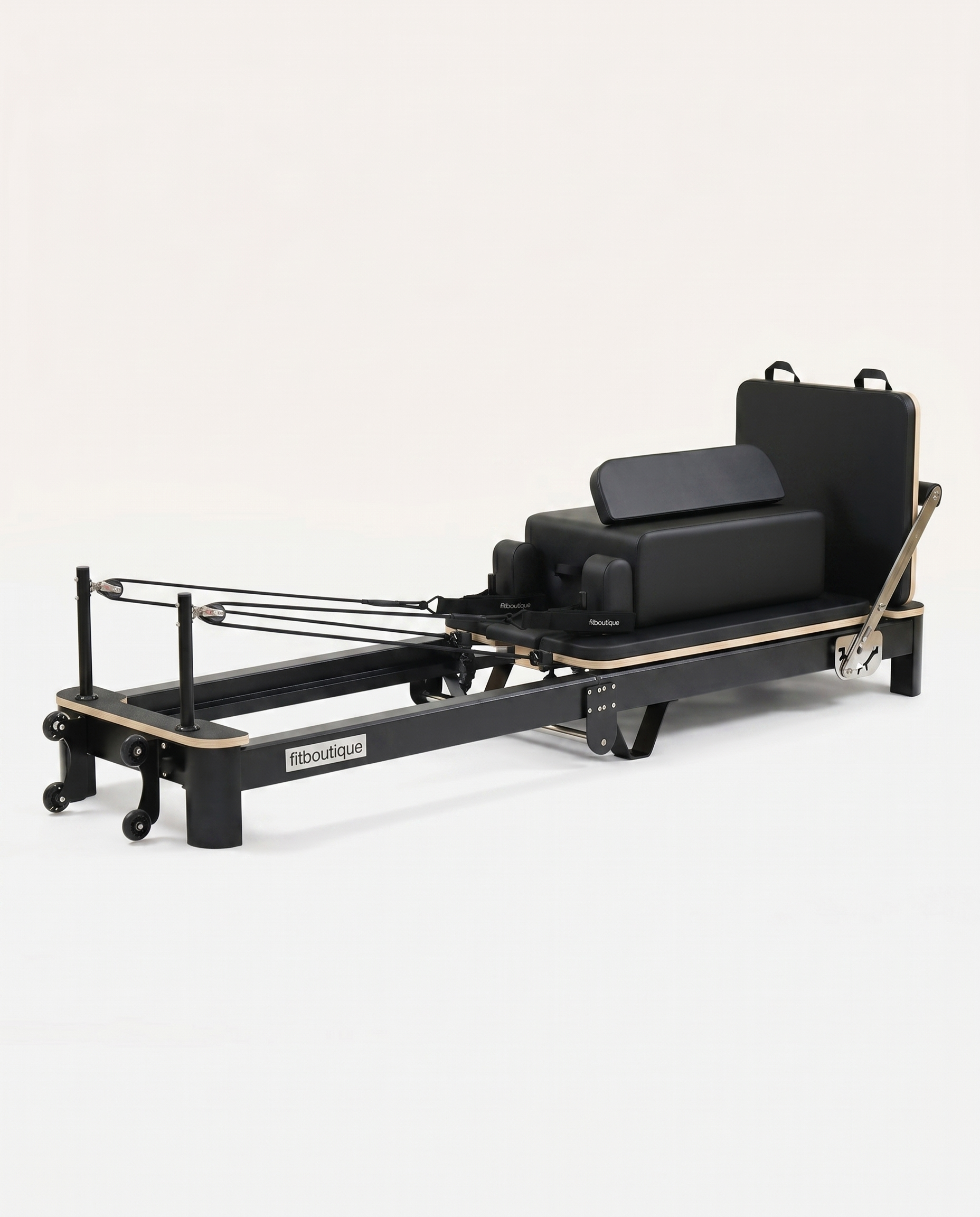
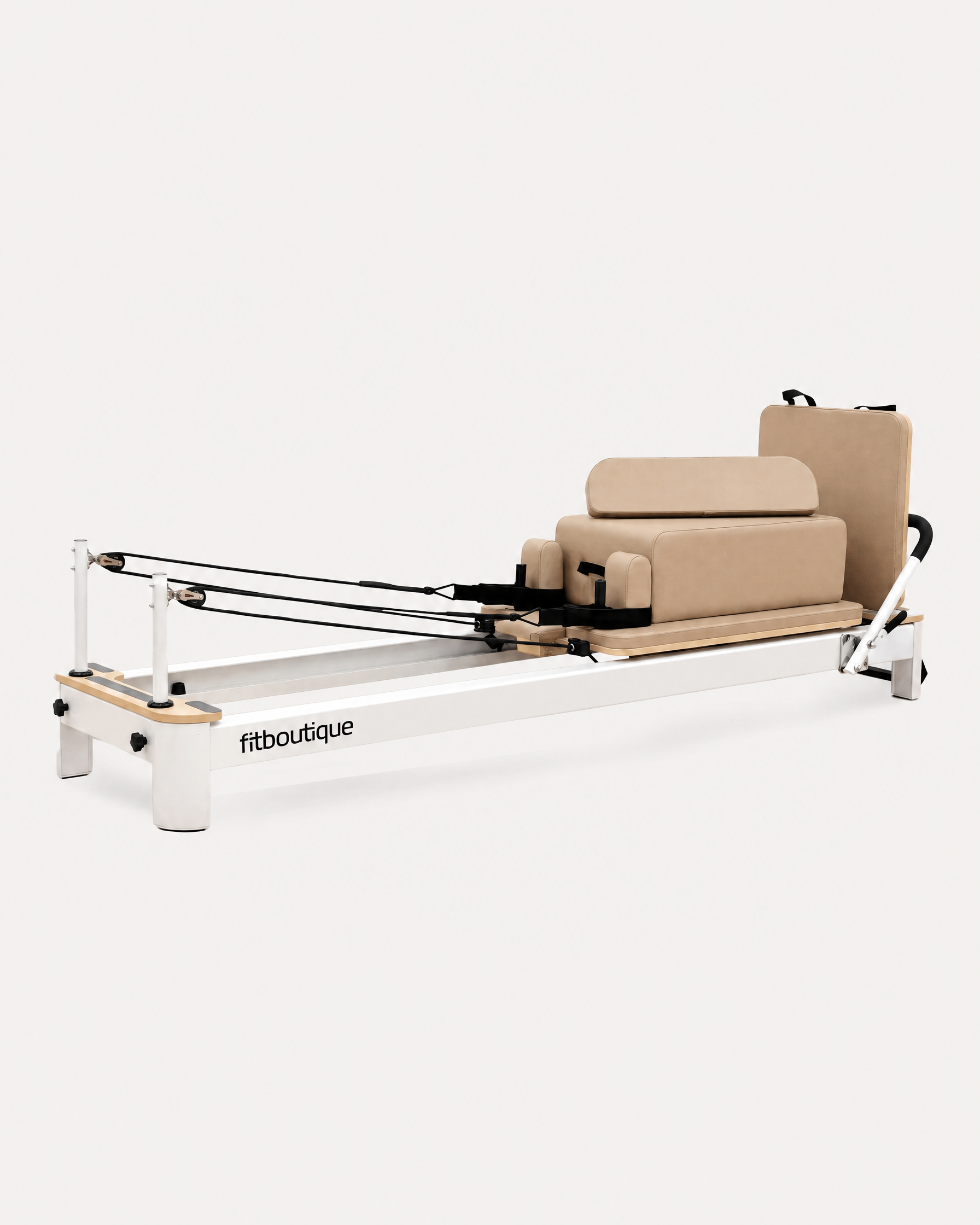
If you are looking at machines, the Onyx Fold Reformer folds away if the room has another job, and the Studio Reformer is the full commercial feel if you have a dedicated space. Every FitBoutique machine comes with 6 German made springs, a jumpboard and box, and arrives assembled. I compared the range in which reformer fits your space and budget, and if you want a straight answer for your situation, get in touch.
A Note From Ayrah
The men who take to this fastest are almost always the ones who have had an injury, and I think that is worth saying plainly.
Not because Pilates is rehabilitation, although physios use reformers for exactly that reason. Because an injury is usually the first time a man has had to pay attention to how a movement happens rather than how much of it he can do.
Once you have had that experience, the reformer makes immediate sense. Before it, the slow controlled version of everything can feel like it is not enough, right up until the first session where a light spring exposes something 20 years of training never touched.
If you are reading this because something already hurts, see a physio first. If you are reading it because you would rather not get to that point, you are early, and early is the good version of this.
Frequently Asked Questions
Is Pilates good for men over 40?
It targets the specific things that change at this age: range lost before strength, stabiliser muscles that have been carried by bigger ones for years, hips and upper back shut down by sitting, and side to side asymmetries a barbell lets you hide. It also lets you train on days when another heavy session would do more harm than good.
Is reformer Pilates hard for men?
The first session is usually humbling, and not because the load is high. It loads positions nothing has asked for in years, at speeds that remove momentum. Slow single leg work on a light spring will make a strong man shake within 20 seconds. That is the machine finding the gap, which is the point.
Should I stop lifting if I start Pilates?
No. Two weight sessions a week for the big patterns and 2 reformer sessions for rotation, single side work, end range strength and deep core is the combination that works. Avoid doing both hard on the same day, and if you do, lift first.
Can Pilates help with back pain?
Many men find their back complains less once the muscles around the spine start doing their share, and physiotherapists use reformers heavily for this reason. A reformer is not treatment, though. If your back already hurts, see a physio first and let them prescribe the right version.
Will Pilates build muscle?
It builds denser, stronger, more controlled muscle rather than size. For visible size, heavy progressive load is the more direct route. For strength you can actually use at 45, the reformer covers ground weights do not.
I have not trained in years. Is this a good place to start?
Better than a gym for most men in that position. You are supported throughout, resistance starts at almost nothing, there is no impact and nothing to drop. Expect to feel a difference in your back and posture within about 2 weeks, and visible change over a few months.
How often should I do it?
Three sessions a week, full body, 40 minutes each. Two is the realistic floor for visible change. One a week maintains what you have rather than building.
Do I need to go to a class?
Two or 3 beginner classes are worth it early, since an instructor will catch things in your hips and ribs that you cannot see. After that, home is where the frequency actually comes from, because the drive, the timetable and the cost per class are what turn 3 sessions a week into 1.
Train The Parts You Have Been Skipping
Every FitBoutique reformer arrives assembled with 6 German made springs, a jumpboard and box included, free delivery Australia wide and a 5 year warranty.
Compare Every ReformerWritten by Ayrah Yuso
I'm part of the FitBoutique team and have a solid passion (and love) for all things exercise related, including Reformer Pilates

















Leave a comment