




Home Pilates Gym
A home Pilates gym is a different project from a home Pilates studio, and confusing the 2 is why people spend more than they need to. A studio is about the room, the light and the layout. A gym is about the kit, and what it can actually make you do.
This is the kit version. What to buy, in what order, what each thing genuinely adds, and what you can skip for a long time without your training suffering at all.

In this article
What you actually need
A home Pilates gym that does everything a studio class does comes down to 4 things, and 2 of them are almost free.
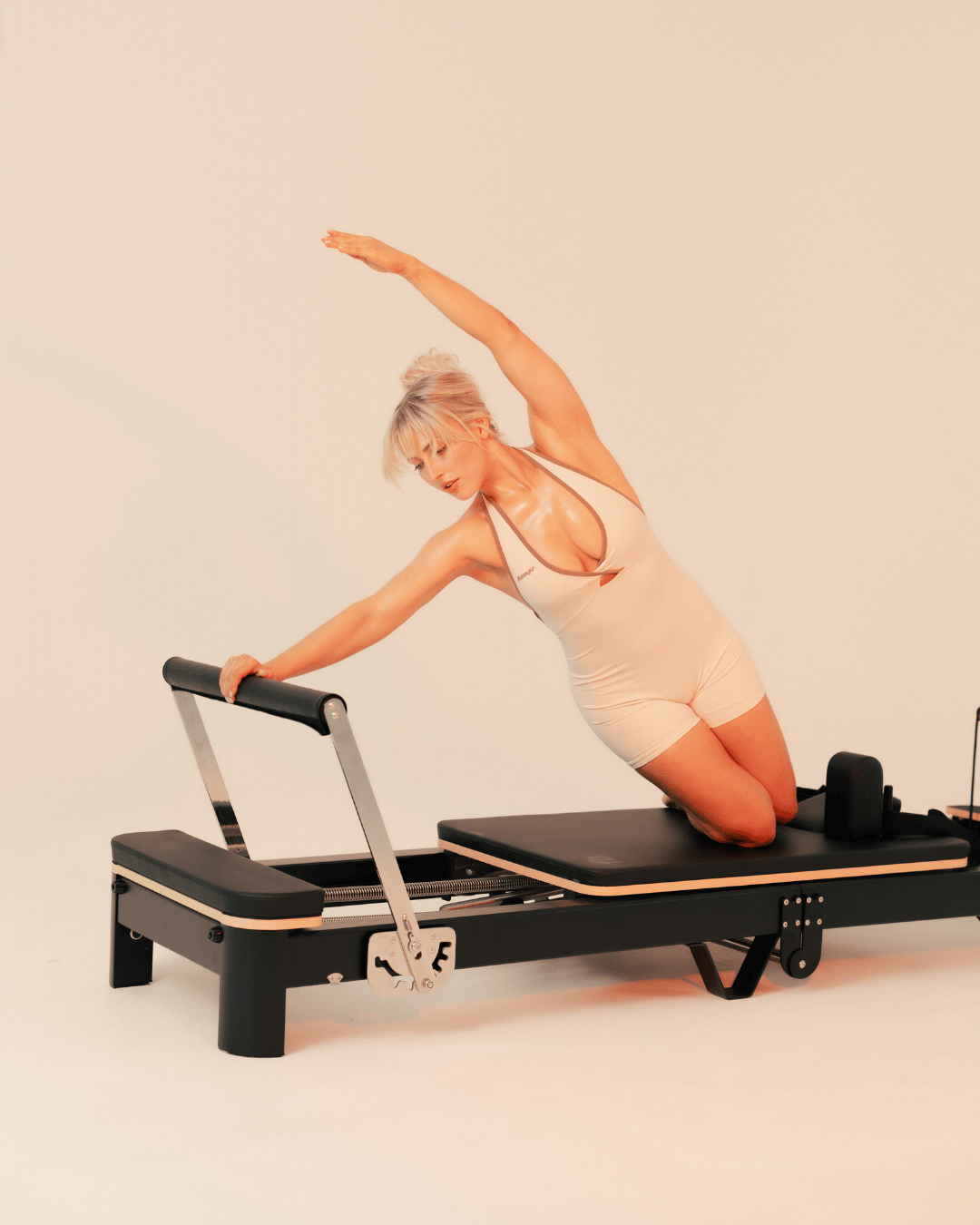
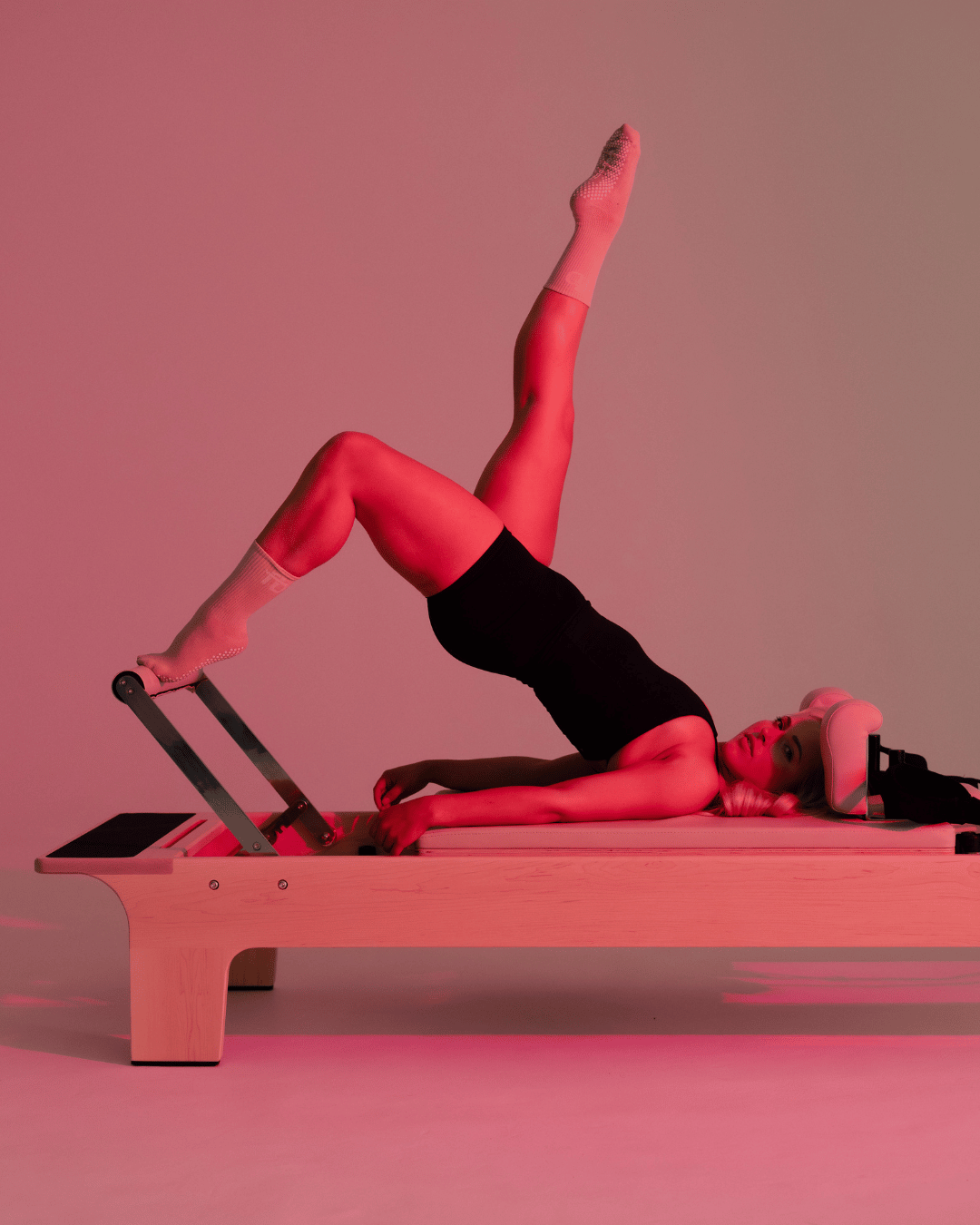
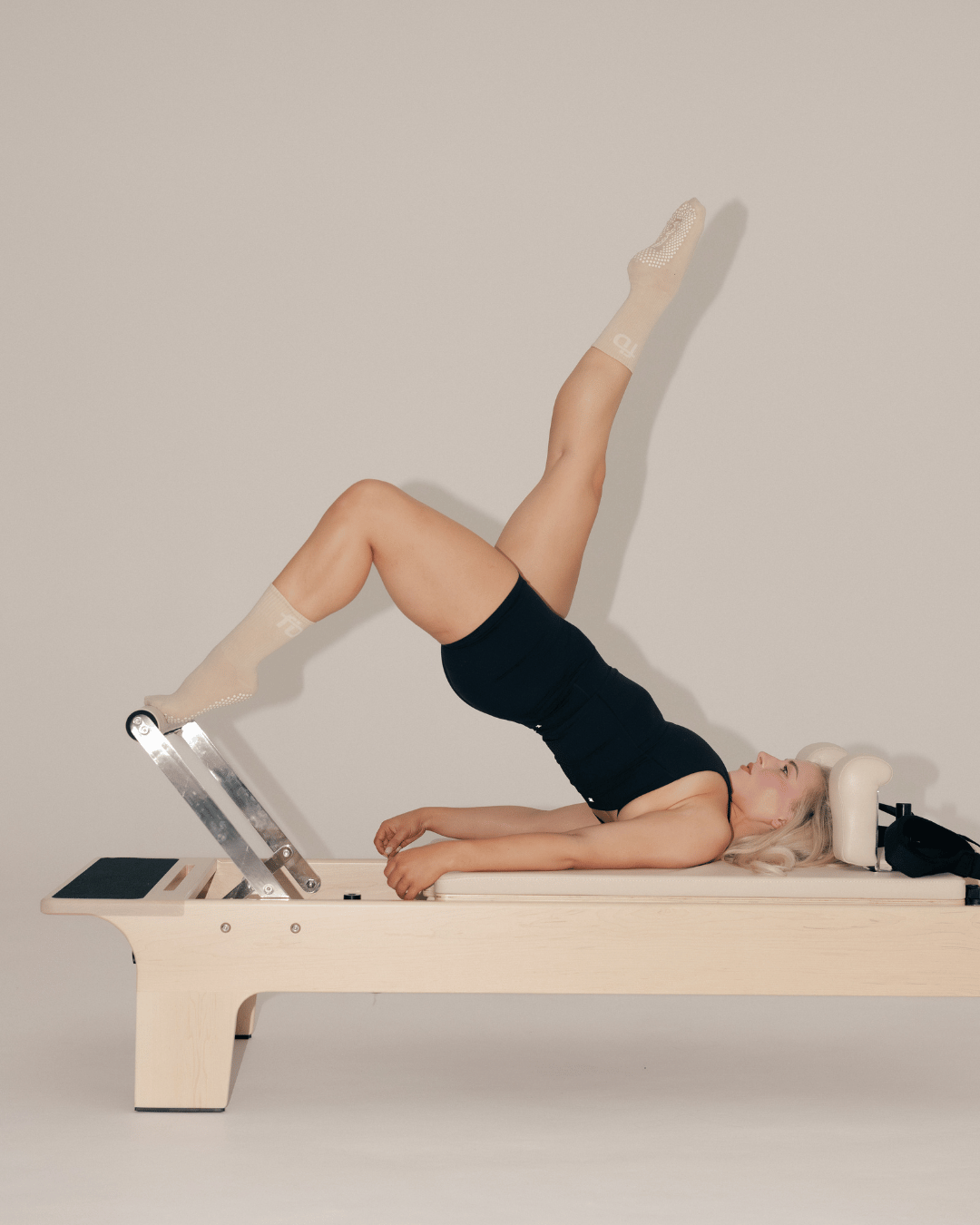
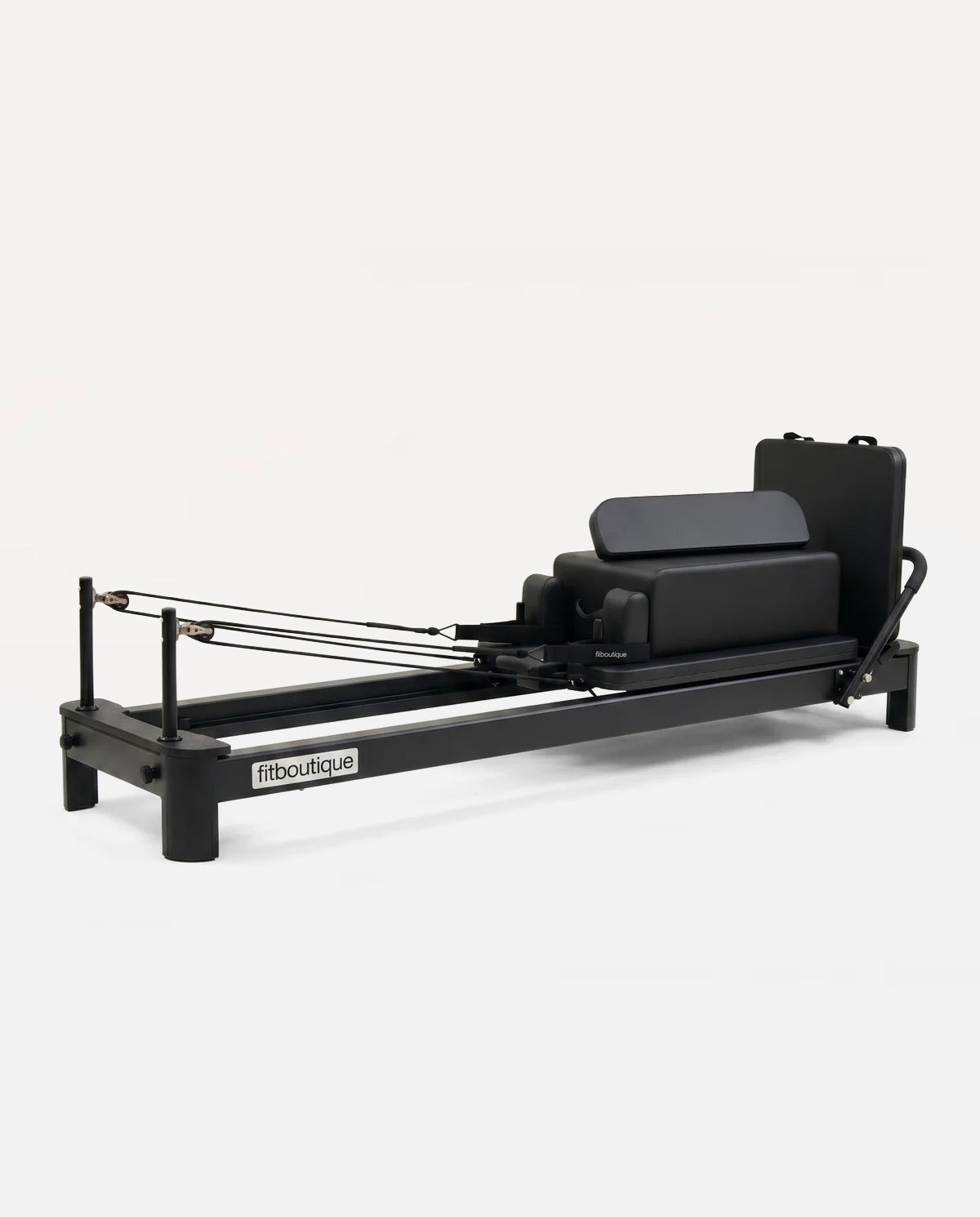
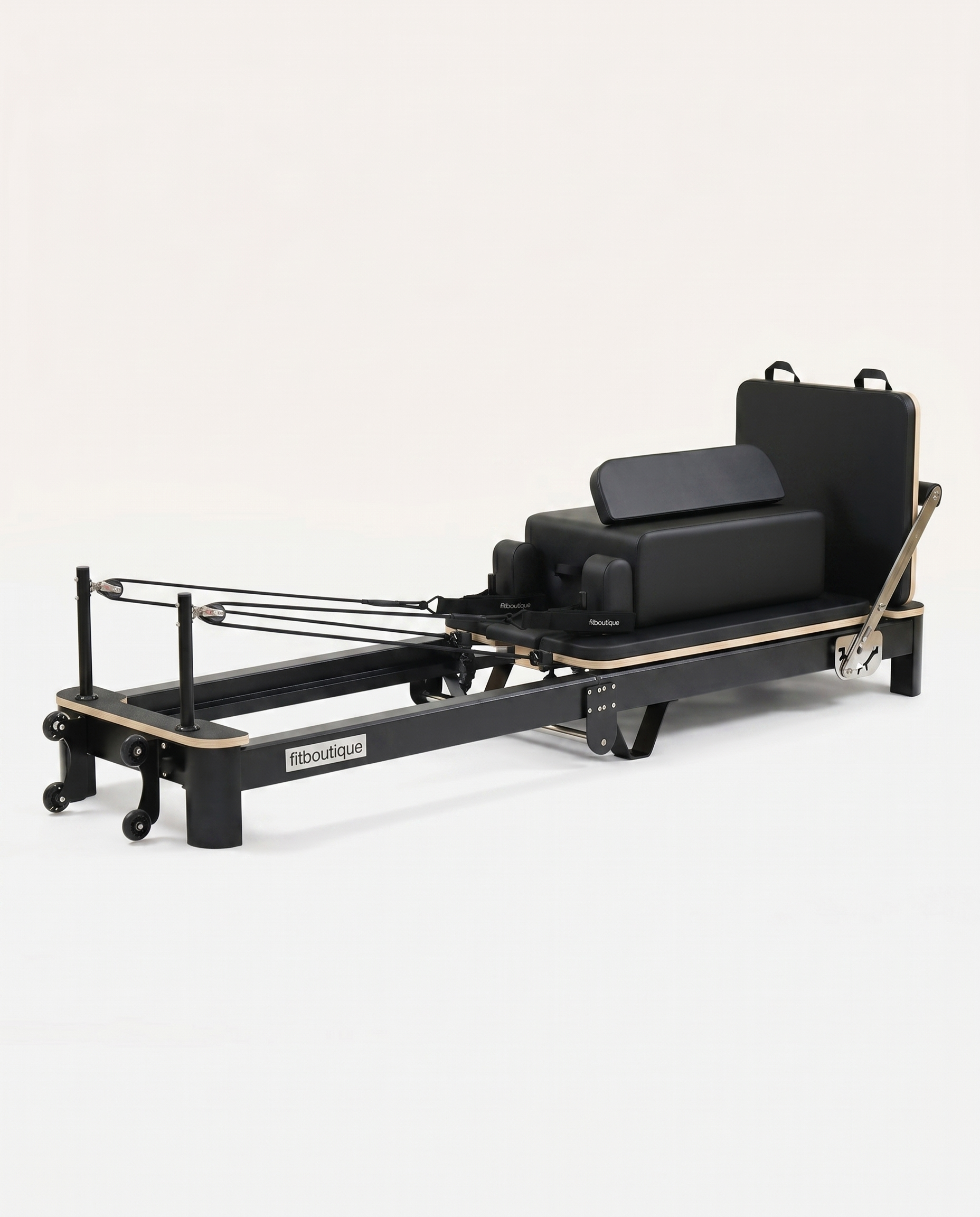
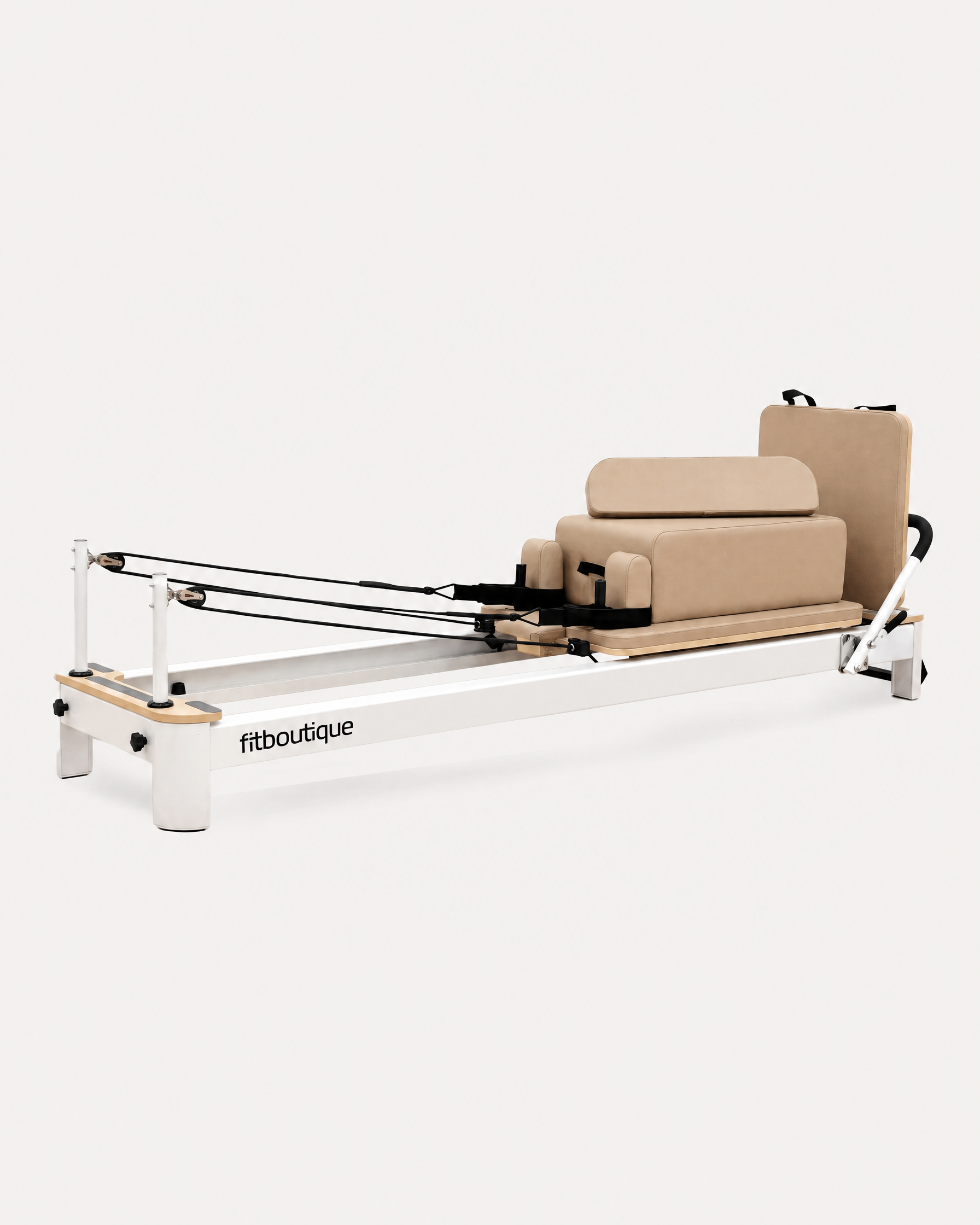
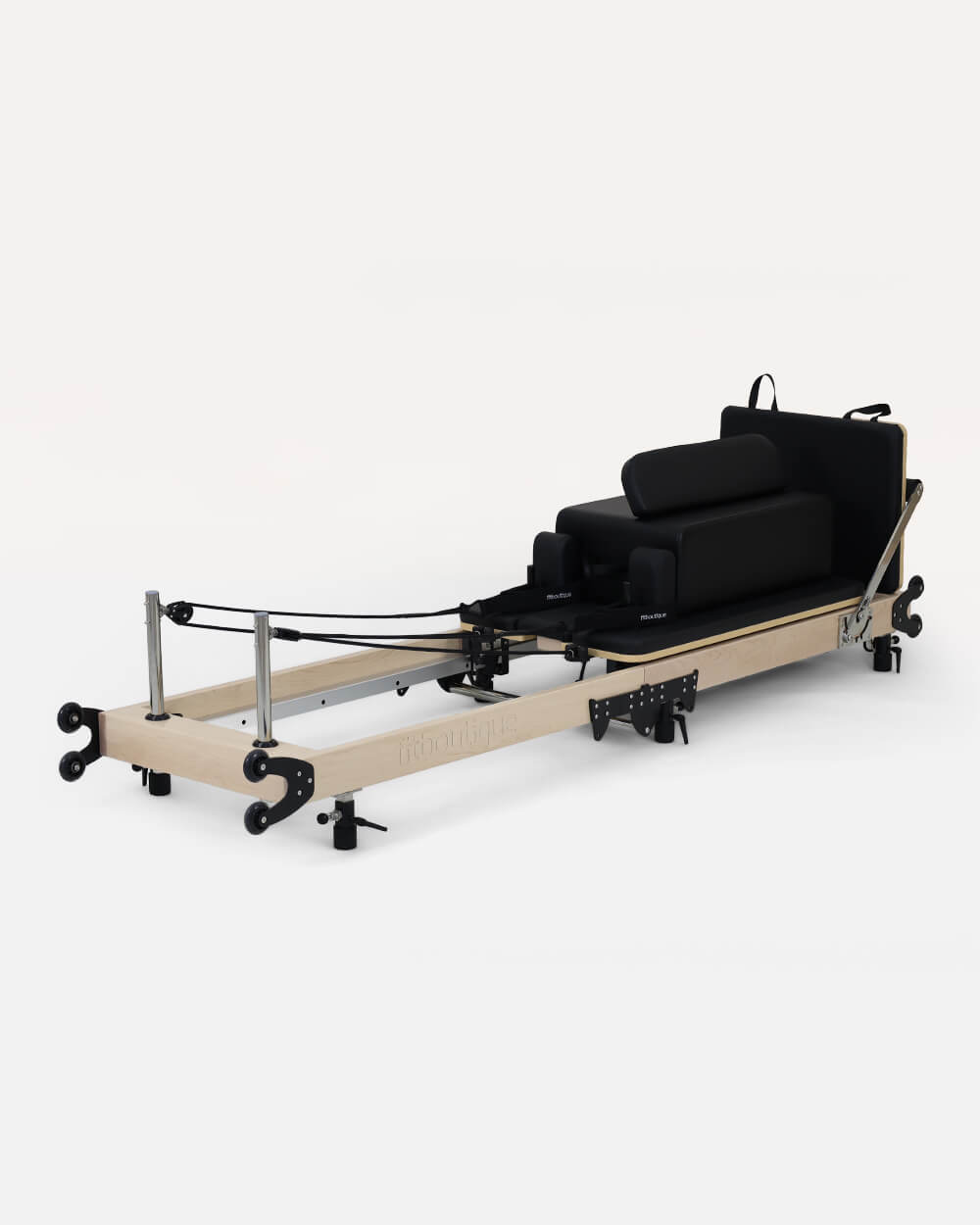
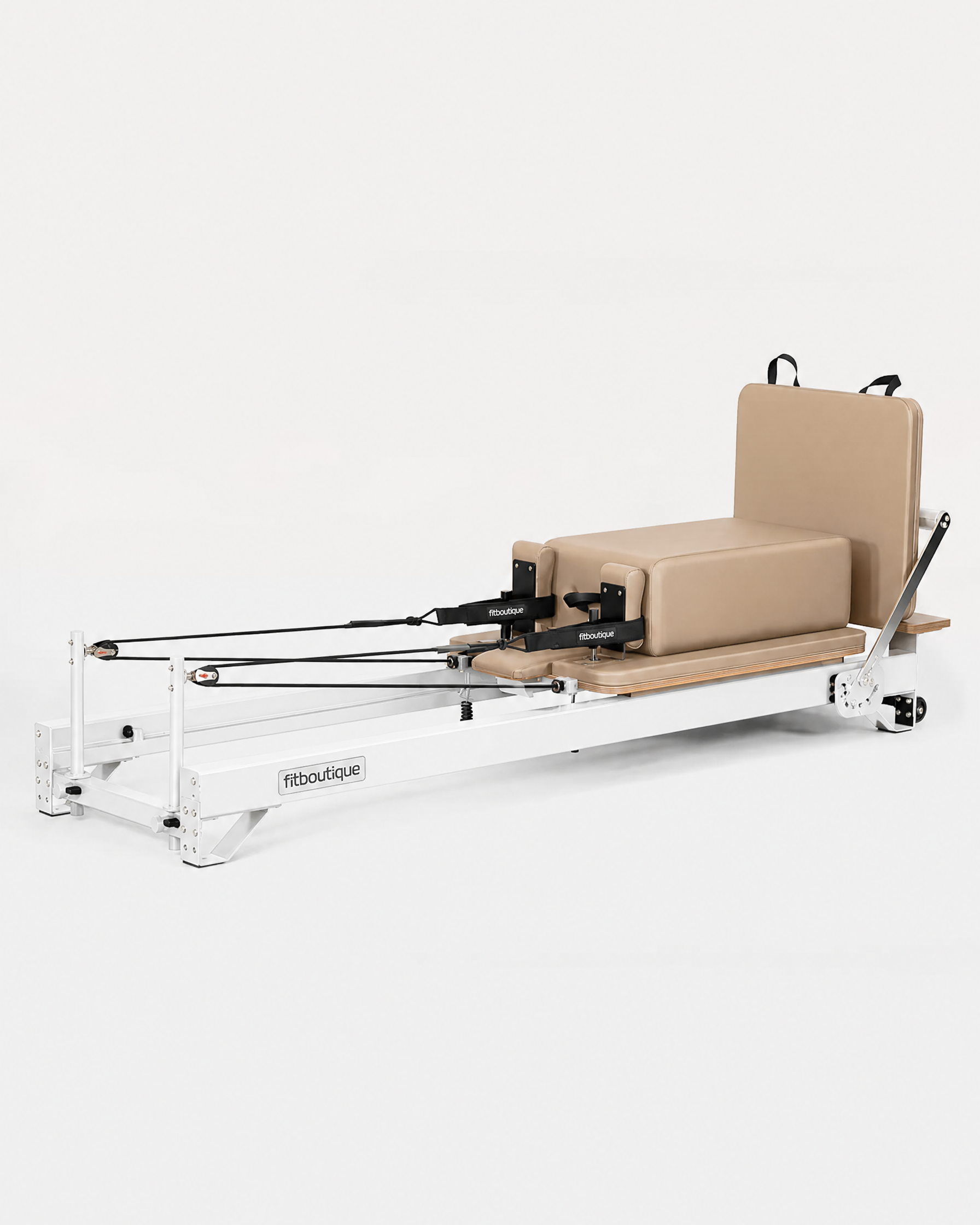
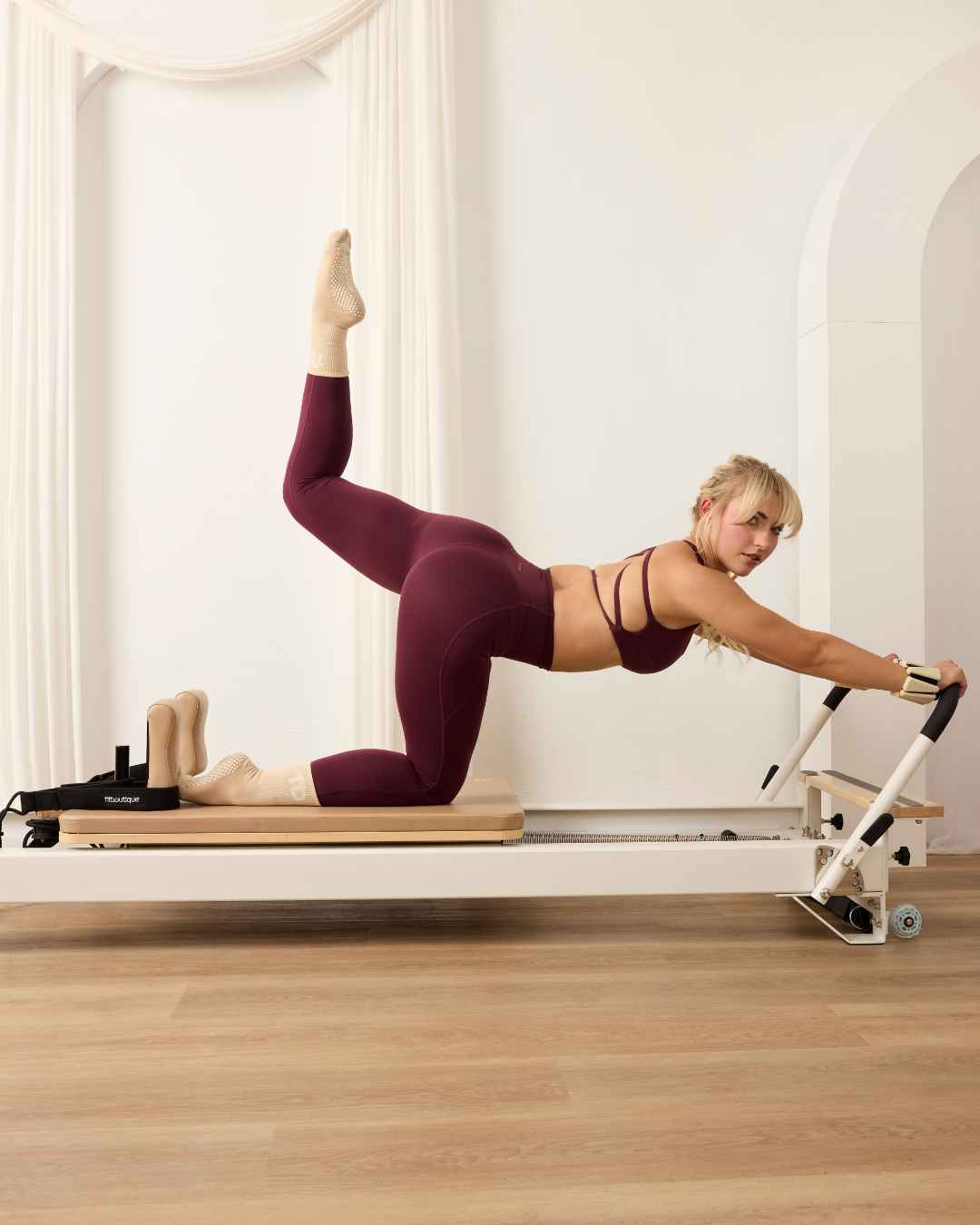
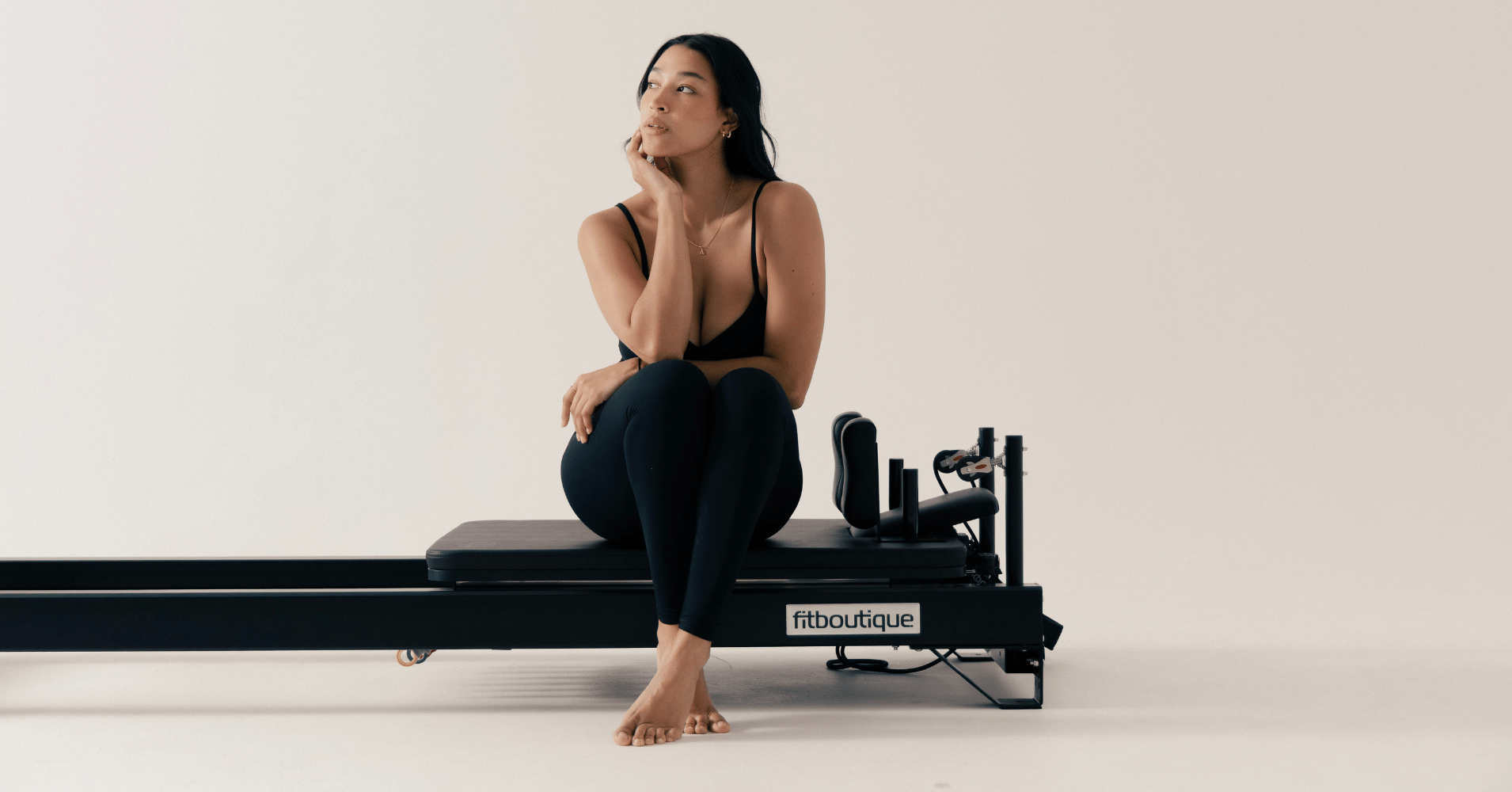
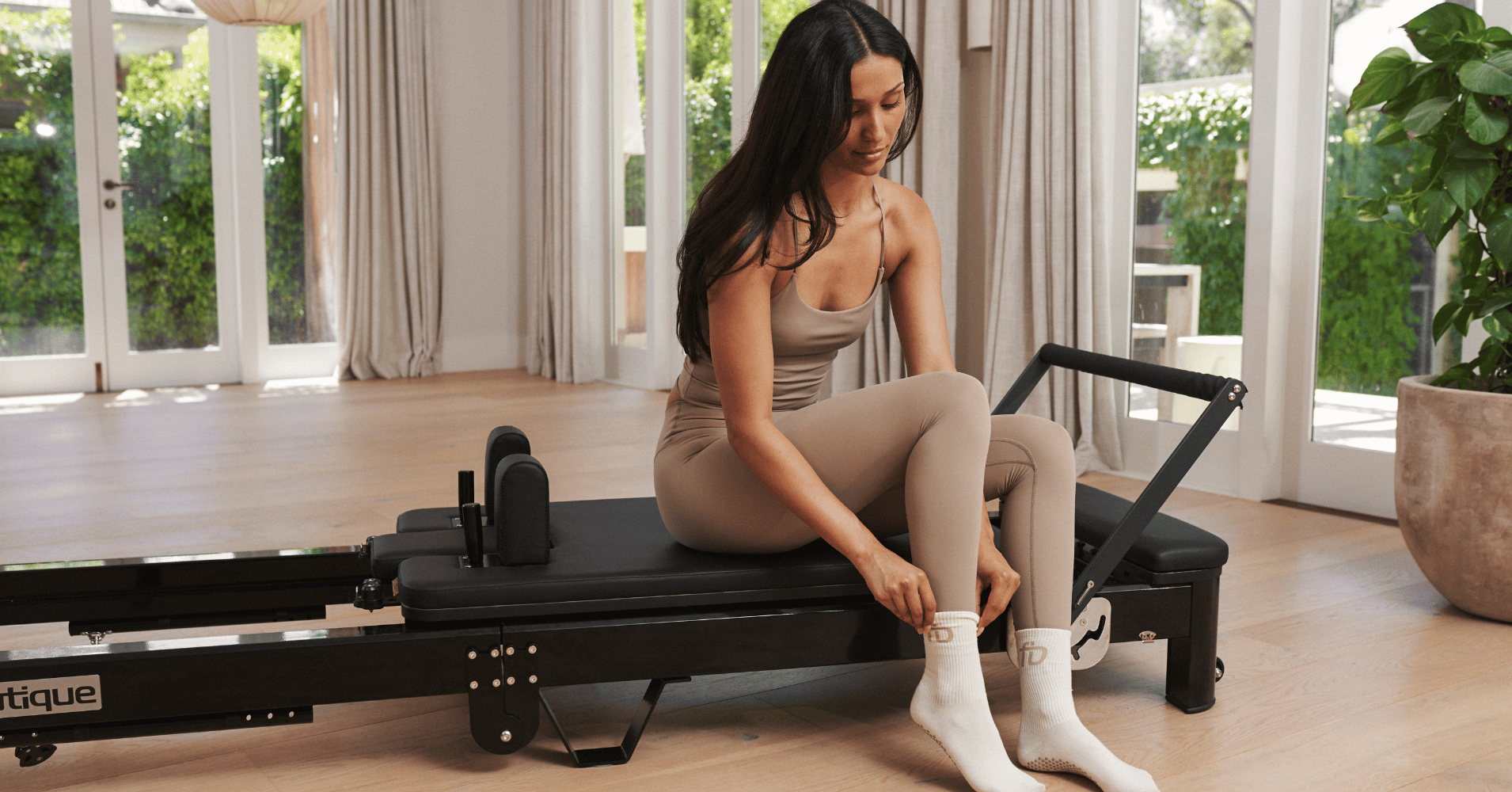
A reformer. This is the gym. Everything else is an accessory. A reformer with a decent spring range covers legs, glutes, arms, back and core, in both directions, with progression built in.
A jumpboard and box. The jumpboard is the cardio. The box unlocks a whole category of exercises you cannot do on the carriage alone. Both come included with every FitBoutique reformer, which is worth saying because plenty of brands charge extra for them.
A mat. For the days you do not want to set up, for warm ups, and for the floor work that keeps your fundamentals honest. A good mat is about 60 dollars and lasts years.
Something to add load to your limbs. A pair of ankle and wrist weights covers this. They sit in a drawer, they cost very little, and they make mat days and off days count for something.
That is the whole gym. Everything after this list is a refinement.
The order to buy in
If you are building this over time rather than all at once, this is the sequence I would use.
- The mat, first and cheap. Start moving before you spend anything serious. A few weeks of mat work tells you whether this is a habit or a phase, and it makes your first reformer sessions much clearer.
- Ankle and wrist weights. Under 60 dollars, and they extend what the mat can do for you while you decide.
- The reformer. This is the step that changes your training rather than extending it. Buy it when you know you will use it, not to make yourself use it.
- Whatever the reformer did not come with. With ours that is nothing, since the jumpboard and box are included. With other brands, check before you buy, because those 2 items priced separately can add hundreds.
- A body bar or magic circle, much later. Genuinely optional. Buy one when a specific exercise you want to do requires it, not before.
Choosing the reformer
Three things decide this, and price is the least important of them.
Does the room have another job. If the reformer is going in a spare room that stays a Pilates room, a full frame model is the nicer machine to train on. If it is going in a lounge, a bedroom or anywhere that has to look normal by lunchtime, a folding model is the only version of this that survives past month 3.
Spring range. This is what your progression runs on. Every FitBoutique reformer comes with 6 German made springs, which gives you enough range to keep progressing for years rather than plateauing at the top of a light set.
How it feels to move on. Carriage glide is the difference between a machine you want to use and a machine you tolerate. It is also the thing you cannot assess from a photo, which is why I would rather someone ask me questions than guess.
I compared every model against room size and budget in which reformer fits your space and budget. If the room is tight, start with the best reformers for small spaces instead.
How much space it takes
Less than people assume, and more than a photo suggests.
The machine itself is roughly the footprint of a single bed. What you also need is about half a metre at the foot end for the carriage travel and enough clearance on one long side to get on and off and to swing a leg out. In practice a space around 3 metres by 2 metres is comfortable, and you can make less work if you are willing to shuffle the machine for certain exercises.
Ceiling height only matters if you plan to stand on the footbar, which most people never do. Flooring matters more. Carpet is fine. Timber and tile are fine. What you want to avoid is anything that lets the frame rock, so check that the floor is level before you decide where it lives.

What you can skip
Most of the accessory wall, at least at first.
Skip the foam roller until something actually feels tight. Skip the sliders, the mini ball and the second mat. Skip anything sold as a reformer upgrade that is really just a strap or a pad. And skip the idea that you need a mirror, which sounds useful and mostly teaches you to train with your head turned.
The one thing I would not skip is a way to record yourself occasionally. Your phone against a water bottle is enough. Watching 30 seconds of your own footwork back will fix more technique than any accessory you can buy.
Building a week around it
A home setup only pays off if it turns into sessions, so here is a week that works for most people without being heroic.
Three reformer sessions, 40 minutes each, full body. Two short mat sessions of 10 to 15 minutes on the days between, mostly core and mobility. A walk most days. That is it, and it is more training than the average person manages with a studio membership, because none of it requires leaving the house.
If 3 sessions is not realistic yet, 2 is the honest floor for visible change. I wrote the full breakdown at each frequency in how many times a week you should do reformer Pilates.
Training on your own
This is the part people worry about most and it is genuinely the easiest problem on the list.
Follow a class rather than freestyling. There is an enormous amount of guided reformer content available, and following someone for 40 minutes removes every decision except turning up. Freestyling is how sessions get shorter and shorter until they stop.
Write down your springs. Without an instructor telling you to go heavier, nothing will prompt you to progress. A note on your phone of what you used is the whole system.
Book yourself in. Put the session in the calendar like a class. The machine being available all day is exactly why it can get pushed to tomorrow.
And take a studio class occasionally if there is one near you. Not because you need it, but because an instructor putting hands on your alignment once a month fixes things you cannot see. More on going solo in Pilates without an instructor.
If you are weighing up which machine suits the room you have, get in touch and I will give you an honest answer rather than a sales one.
A Note From Ayrah
My home setup started as a mat in front of the television and I want to be honest about how long that lasted, because it was about 5 weeks.
Not because mat work is bad. Because the television was right there, and a mat asks you to supply all of the structure yourself. When you are tired, you supply less, and then less, and then none.
What the reformer changed was not the intensity. It was that setting the springs is a decision, and once you have made it you are in a session. The machine gives the session a shape that a mat on a lounge room floor never did for me.
So if you have tried a home Pilates habit before and it faded, do not read that as a lack of discipline. Read it as a setup that asked too much of you.
Frequently Asked Questions
What do I need for a home Pilates gym?
A reformer, a jumpboard and box, a mat and a pair of ankle or wrist weights. The reformer is the gym and everything else covers the days you do not use it. Every FitBoutique reformer includes the jumpboard and box, so the mat and weights are the only extras most people ever buy.
How much space does a home Pilates gym need?
Around 3 metres by 2 metres is comfortable. The machine itself is roughly the footprint of a single bed, plus about half a metre at the foot end for carriage travel and enough clearance along one side to get on and off. Ceiling height rarely matters. A level floor does.
Do I need a dedicated room?
No, and most people do not have one. If the room has another job during the day, choose a folding model so the floor space comes back between sessions. A dedicated room is nicer, not necessary.
What accessories are worth buying?
A mat and ankle or wrist weights, both cheap. After that, buy an accessory only when a specific exercise you want to do requires it. Foam rollers, mini balls, sliders and mirrors can all wait, usually indefinitely.
Is a home Pilates gym cheaper than a studio?
Over a couple of years, generally yes, since there is no per class cost and no expiring pack. The bigger difference is frequency. People with a machine at home tend to train 3 times a week where a studio schedule usually produces 1 or 2.
Can I do reformer Pilates without an instructor?
Yes, if you follow guided classes rather than making it up. Follow a session, write down your springs so you keep progressing, and film yourself occasionally. An in person class now and then is useful for alignment you cannot see yourself.
What should a beginner buy first?
A mat, and start moving. A few weeks of mat work tells you whether this is a habit before you spend anything serious, and it makes your first reformer sessions considerably less confusing.
How many springs do I need?
Enough range that you can keep making the work harder for years. Our reformers come with 6 German made springs for that reason. A machine with a narrow spring range will stop being useful once you get strong.
Build The Gym Once
Every FitBoutique reformer arrives assembled with 6 German made springs, a jumpboard and box included, free delivery Australia wide and a 5 year warranty.
Compare Every Reformer
Written by Ayrah Yuso
I'm part of the FitBoutique team and have a solid passion (and love) for all things exercise related, including Reformer Pilates

















Leave a comment