





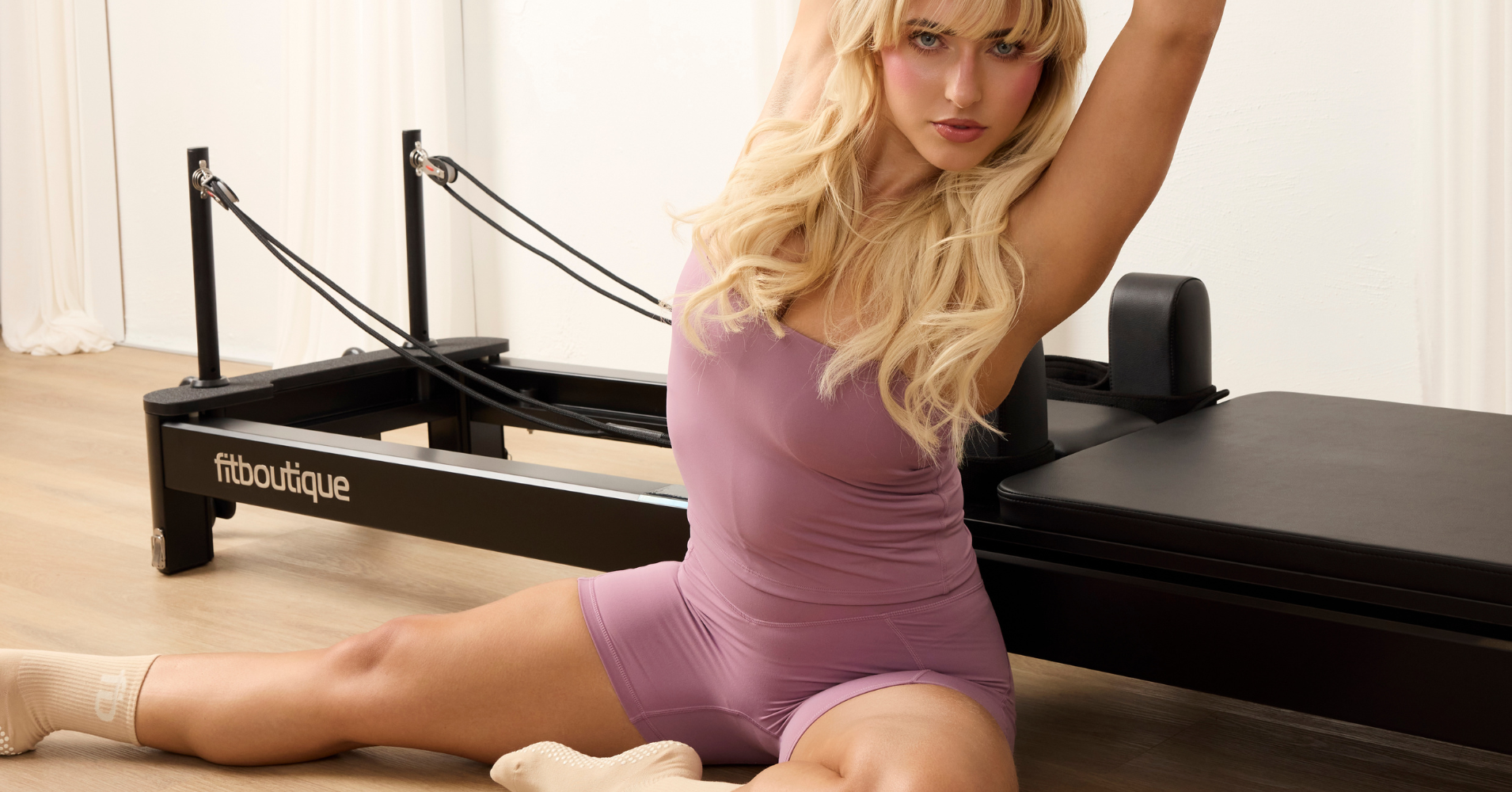
Reformer Pilates Vs Weight Training
This is usually framed as a fight, and it is not one. Reformer Pilates and weight training load your muscles in different ways, and the interesting question is not which wins, it is which one is doing the job you actually want done.
So here is the honest comparison, including the parts where weights are simply better and the parts where the reformer is.

In this article
The difference is the load curve
A dumbbell weighs the same at every point in a movement. Gravity pulls straight down, so the resistance changes only with your leverage, and there are points in most lifts where the load on the muscle drops away almost entirely.
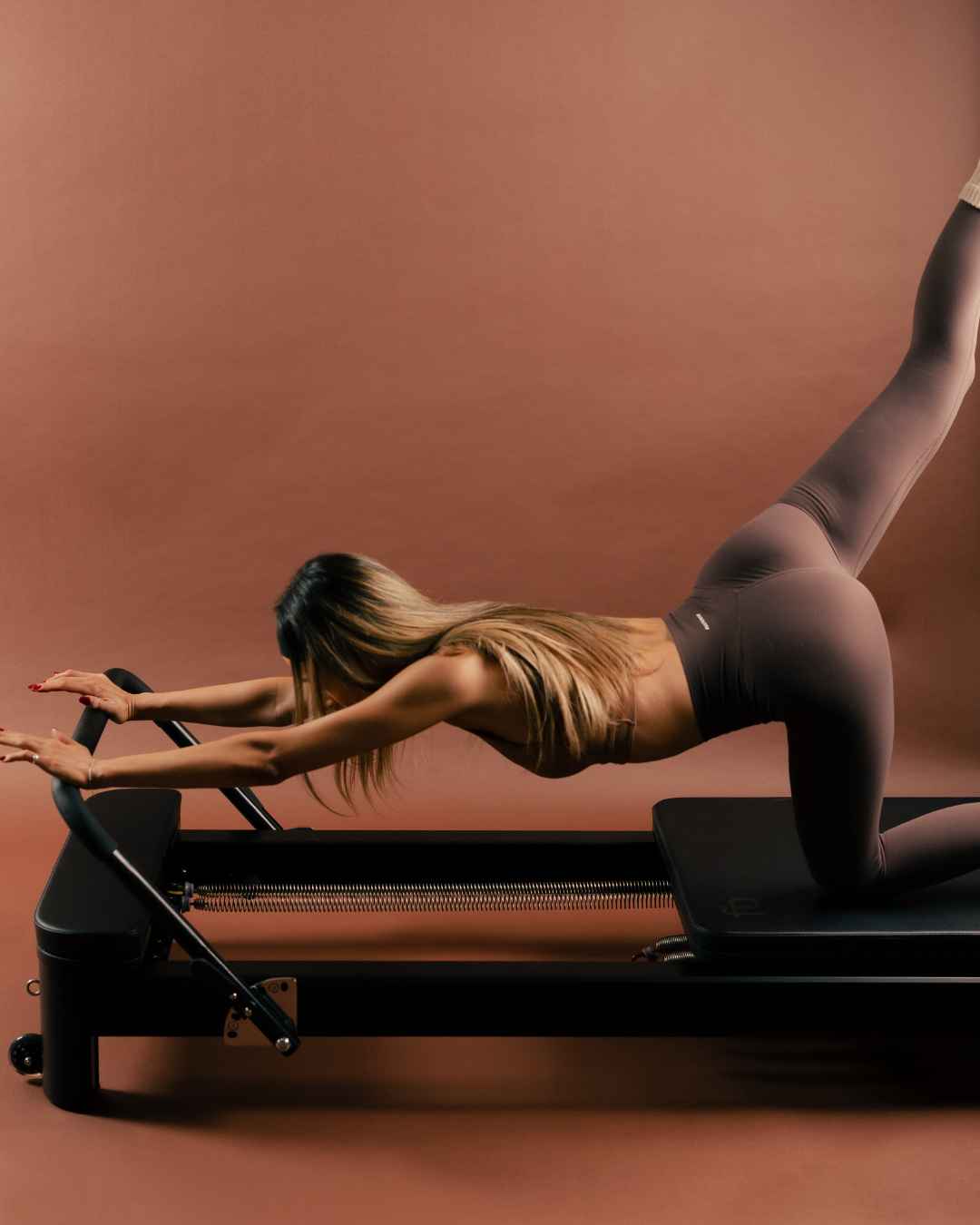
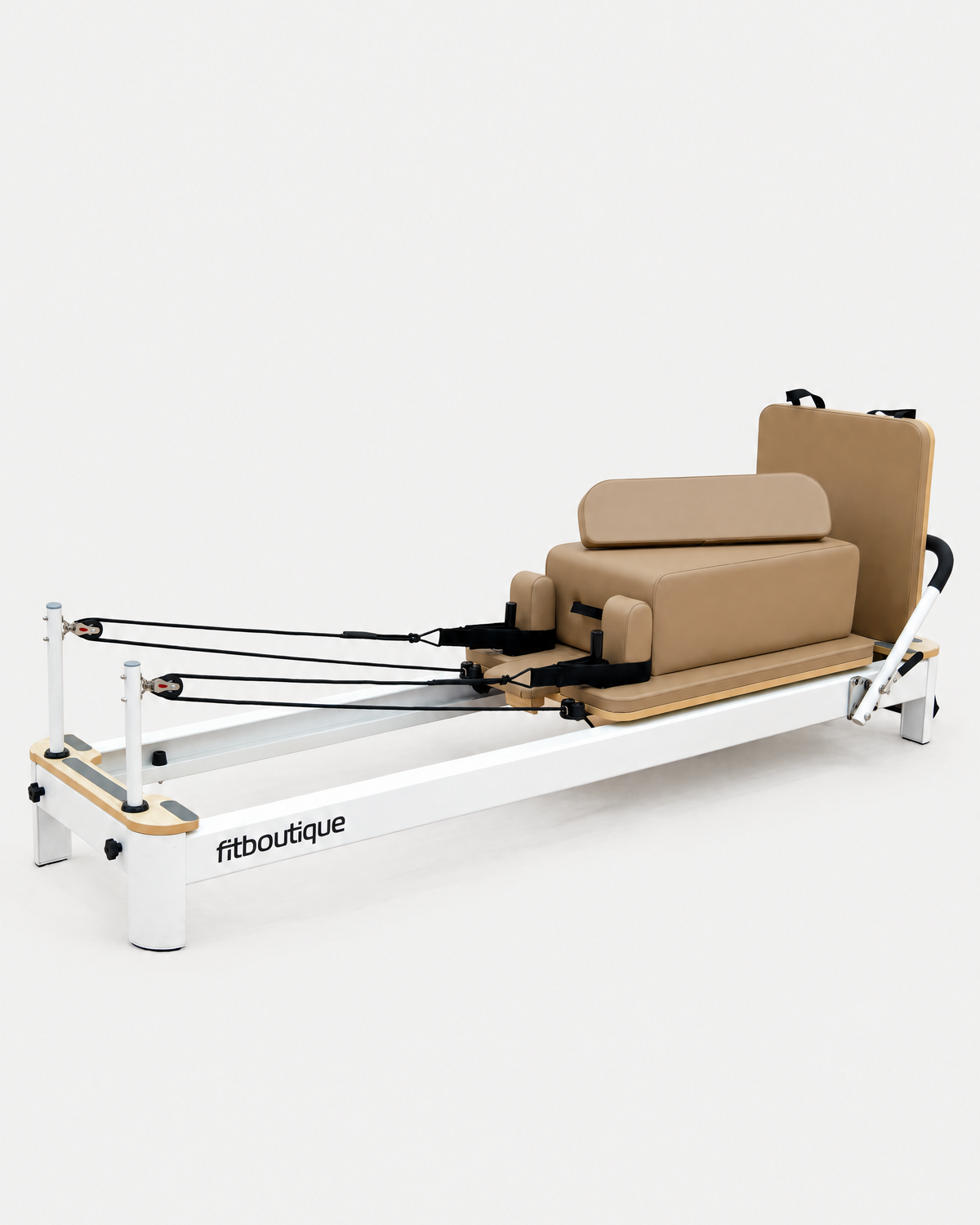
A spring does the opposite. It gets harder the further it stretches, so the resistance builds through the range rather than staying flat. And because the springs sit horizontally on a reformer, you are not limited to fighting gravity downward. You can load a muscle pushing, pulling, sideways and in rotation, from positions a dumbbell cannot reach.
That is the whole difference, and everything below follows from it.
What weights do better
Three things, clearly.
Absolute load. If you want to move heavy things, you have to move heavy things. A barbell will take you to loads a spring simply cannot reach, and that matters for maximum strength and for bone loading.
Simple progression. Add 2.5 kilograms. There is no equivalent on a reformer that is quite as precise or as endless, and that simplicity is genuinely valuable for tracking progress over years.
Size, if that is the goal. Visible muscle size responds best to heavy, progressive load with enough volume. Weights are the more direct route to that, and I am not going to pretend a reformer is a substitute for someone whose goal is to get noticeably bigger.
What the reformer does better
Time under tension. Because the spring resists you in both directions, there is no rest point in the movement. A slow set on a reformer keeps a muscle working continuously in a way a dumbbell set usually does not.
Stabilisers. The carriage moves. That means every exercise is also a balance and control task, and the small muscles around your joints have to work rather than being carried by a fixed bench or a machine track.
Range. Spring resistance through a lengthening muscle is a very effective way to train strength at the end of a range, which is precisely where most people are weakest and where a lot of injuries happen.
Joint friendliness. No impact, no load sitting on your spine, and the ability to reduce resistance to almost nothing. This is why reformers appear so often in physiotherapy settings and why people train on them through periods when the gym is not an option.
Not needing to know much. A reformer session with reasonable technique is safe. A heavy barbell session with poor technique is not, and the learning curve to lift safely is longer than people admit.
Can you build muscle on a reformer
Yes, with a qualification that matters.
Muscle adapts to progressive overload, and a reformer can provide that. You can increase spring load, slow the tempo, extend the range, add repetitions, or move to a harder variation of the same exercise. Do that consistently and muscle responds, because muscle does not know what equipment it is attached to.
The qualification is the ceiling. There is a point at which the heaviest spring setting stops being a meaningful challenge to a well trained leg, and past that point weights take over. Most people never reach it. Someone who has been lifting for years will reach it quickly.
What a reformer reliably produces is denser, stronger, more defined muscle rather than a large increase in size. Whether that is a limitation or exactly what you wanted depends entirely on you. I covered this in more detail in reformer Pilates for strength and whether reformer Pilates builds muscle.

How to combine the two
This is what most people should actually do, and the structure is simple.
- Use weights for the big, heavy patterns. Squats, hinges, presses and pulls under real load, twice a week. This is where absolute strength and bone loading come from.
- Use the reformer for everything the barbell ignores. Rotation, single leg work, end range strength, deep core and the small stabilisers. Two sessions a week covers it.
- Do not do both hard on the same day. If you must, lift first and use the reformer second, because heavy lifting needs a fresh nervous system and reformer work does not.
- Use the reformer on the days after heavy sessions. Low spring, full range, slow. It moves blood through tired muscle without adding fatigue.
- Keep one measure from each. A lift number and a spring setting. If either stops moving for a month, something needs to change.
Using the reformer instead of weights
Entirely reasonable for most people, and here is how to do it properly rather than by default.
Train 3 times a week, full body. Use the heaviest spring setting you can control through a full range rather than the setting that feels comfortable. Progress every 3 weeks, by spring, tempo or range, and write it down or it will not happen. Include the jumpboard for the loaded, faster work that the carriage alone does not cover.
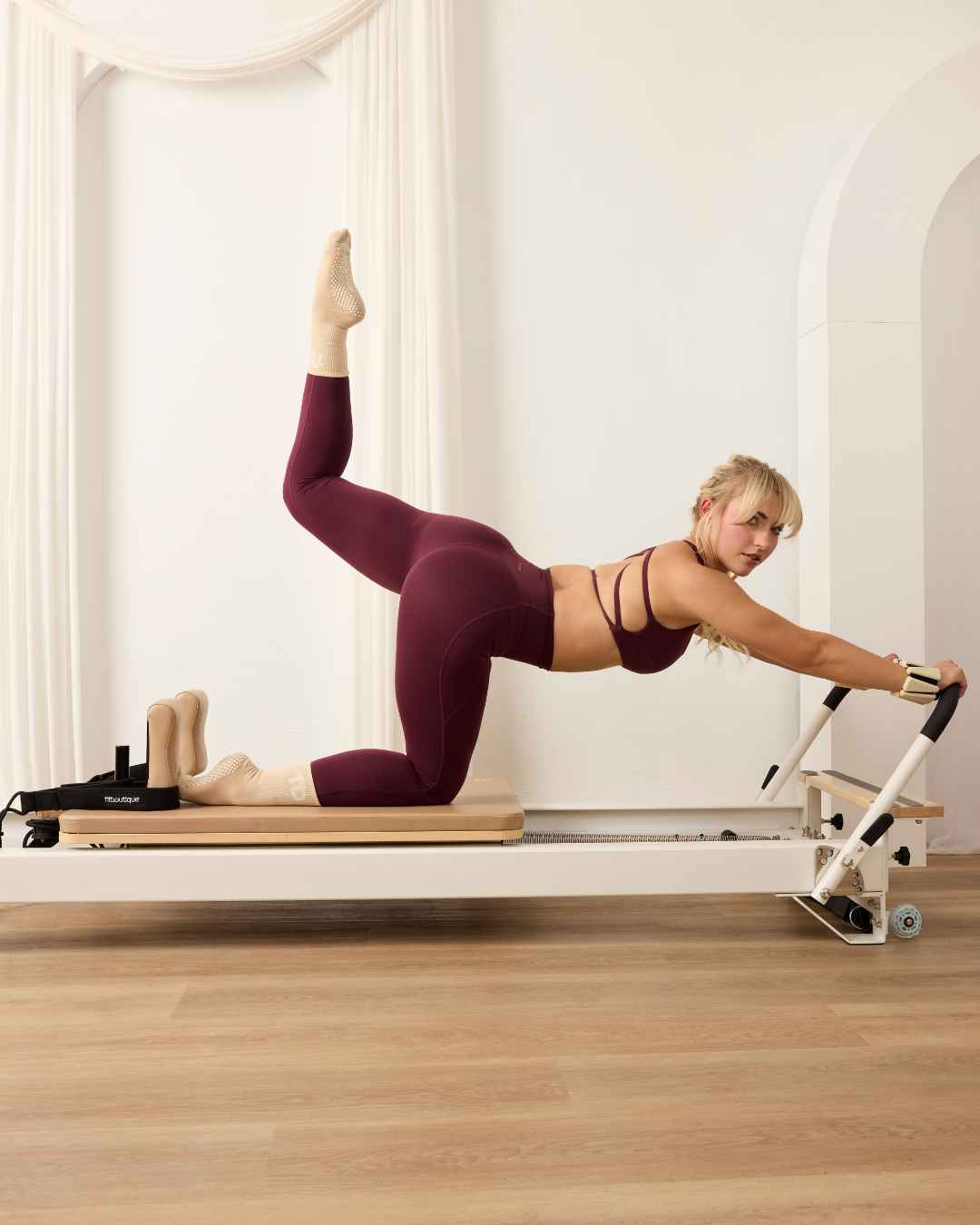
The gap you will still have is heavy load through the hips and spine, which matters more as you get older. If that is a concern, adding something as simple as a set of ankle and wrist weights or a weekly session with something heavy fills it without you needing a gym membership.
Which one you should pick
Pick weights if your goal is maximum strength, visible size, or you already lift and enjoy it.
Pick the reformer if you want strength without the joint load, if your back, knees or shoulders make barbell work unappealing, if you are training around an injury with guidance, or if the honest truth is that you will use a machine at home and will not drive to a gym.
Pick both if you have the time, because they cover each other completely.
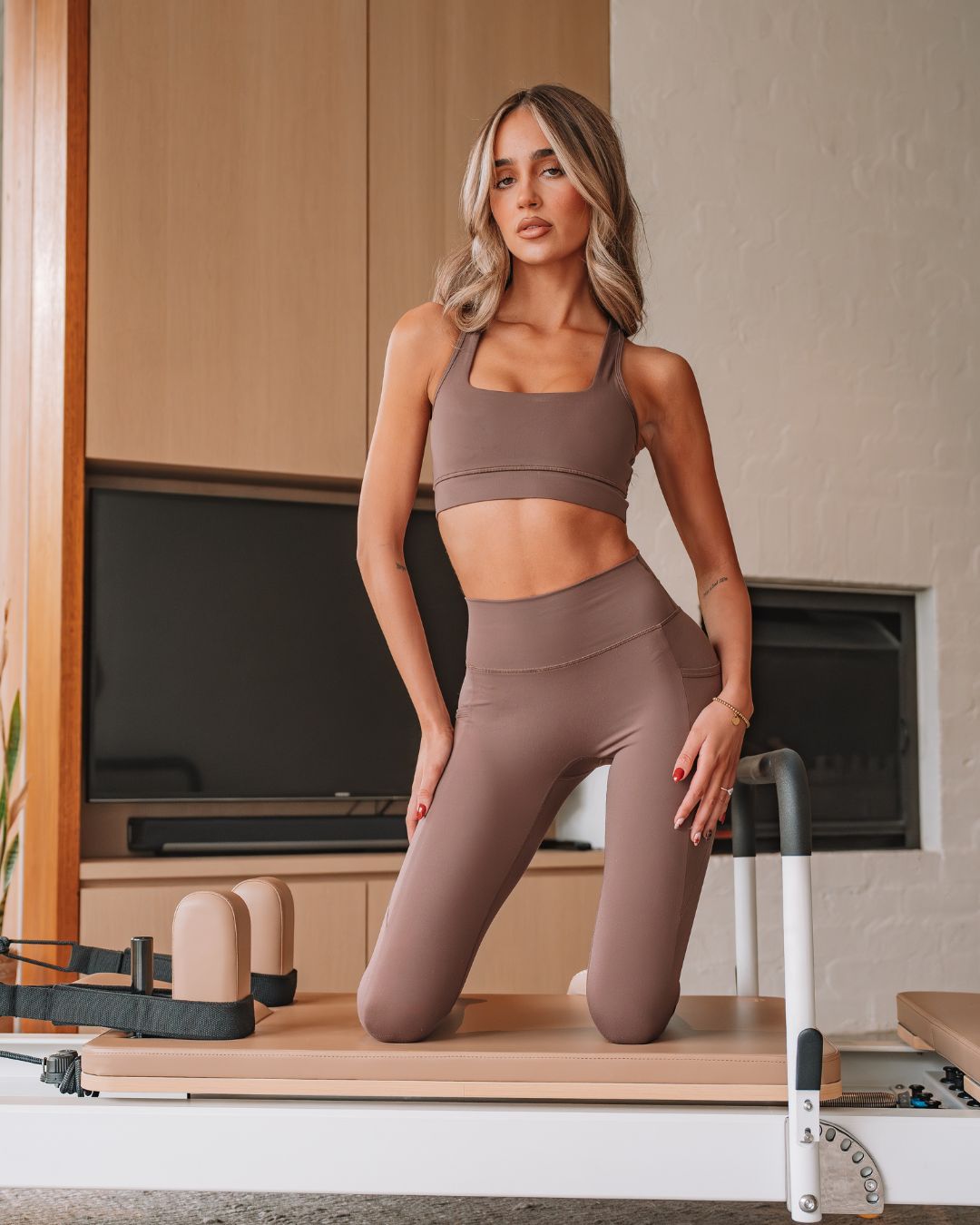
And if the deciding factor is frequency rather than physiology, which it usually is, a reformer at home is the version of this that people actually do 3 times a week. I compared the range in which reformer fits your space and budget, and if you want a straight answer for your situation, get in touch.
A Note From Ayrah
I lifted for years before I touched a reformer, and the thing that surprised me was not that the reformer was hard. It was where it was hard.
I could squat respectably. Put me on a carriage doing slow single leg work on a light spring and my hip would shake within 20 seconds, because I had spent years being strong in one plane and nowhere else.
That was not a failure of my lifting. It was a gap in it, and it was a gap I could not have found under a barbell, because a barbell lets your strong side and your big muscles quietly cover for everything else.
My lifts got better after I added reformer work, which is not what I expected at all. If you already train, that is the argument I would make, not the one about tone.
Frequently Asked Questions
Is reformer Pilates as good as weight training?
For different things. Weights are better for absolute strength, visible size and bone loading. The reformer is better for time under tension, stabiliser muscles, end range strength and joint friendliness. Most people get the best result from both, and either alone is far better than neither.
Can you build muscle with a reformer instead of weights?
Yes. Muscle responds to progressive overload, and you can progress on a reformer by increasing spring load, slowing tempo, extending range or moving to harder variations. The ceiling is lower than a barbell, so a very well trained lifter will outgrow it, but most people never reach that point.
Why do springs feel different from weights?
A weight is constant and pulls straight down. A spring gets harder the further it stretches and sits horizontally on a reformer, so you can load a muscle pushing, pulling, sideways and in rotation. Weights load you most where you are strongest, springs load you most where you are longest.
Should I do Pilates and weights on the same day?
Preferably not both hard. If you do, lift first and use the reformer afterwards, since heavy lifting needs a fresh nervous system. Reformer work on the day after a heavy session, on light springs through a full range, is genuinely useful.
How should I structure a week with both?
Two weight sessions covering the big patterns, and 2 reformer sessions covering rotation, single leg work, end range strength and deep core. Keep one measure from each, a lift number and a spring setting, and change something if either stops moving for a month.
Will reformer Pilates make me bulky?
Not in the way heavy lifting can. Spring resistance with high time under tension tends to produce denser, stronger and more defined muscle rather than a large increase in size.
Is the reformer better for bad joints?
Generally yes. There is no impact, no load sitting on your spine, and you can reduce the resistance to almost nothing, which is why reformers are used so widely in physiotherapy. If you are training around a specific injury, do it with a physio rather than from an article.
What does the reformer miss that weights cover?
Heavy load through the hips and spine, which matters more with age. If you train only on a reformer, adding ankle and wrist weights or one weekly session with something heavy fills that gap without needing a gym.
Load It Both Ways
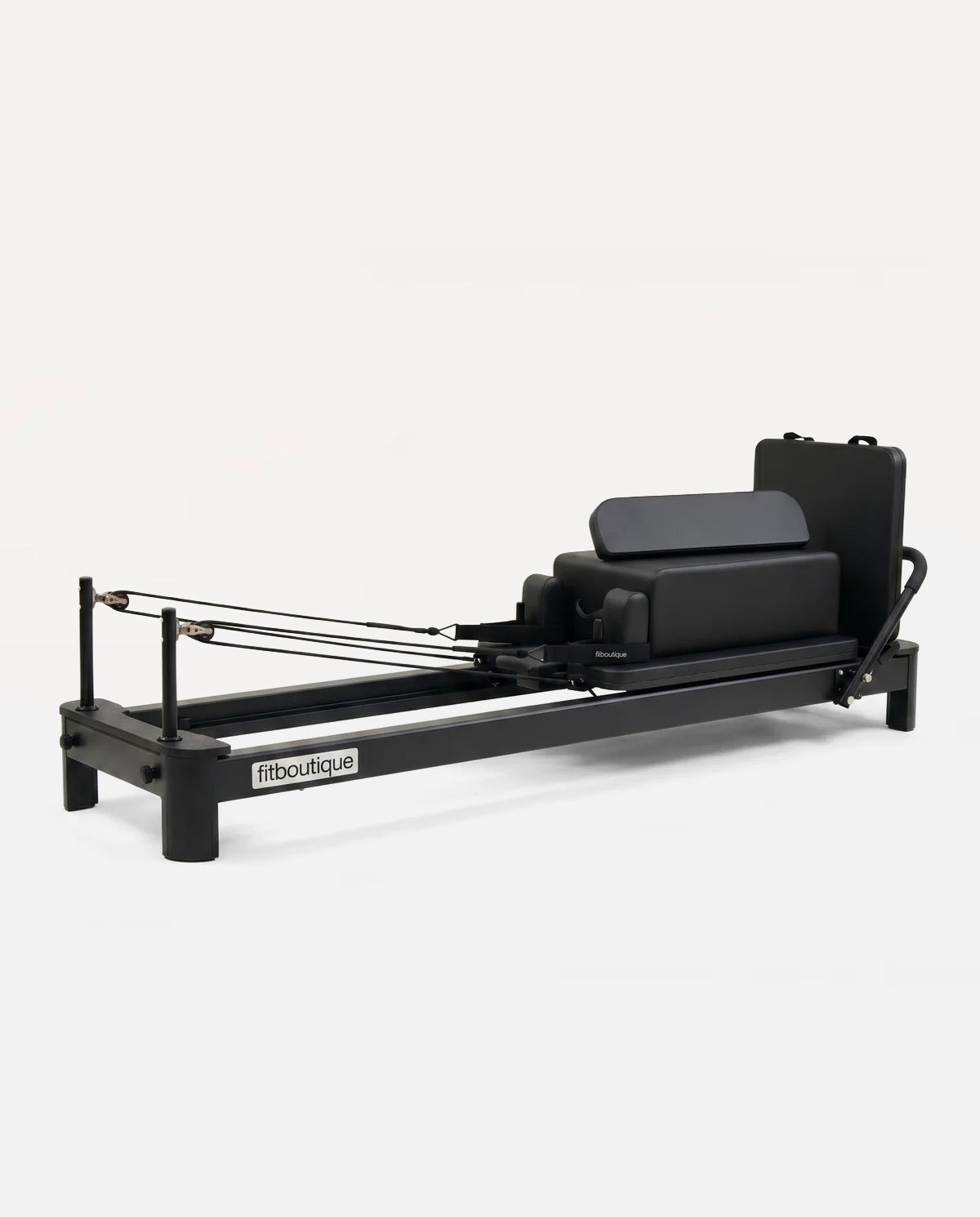
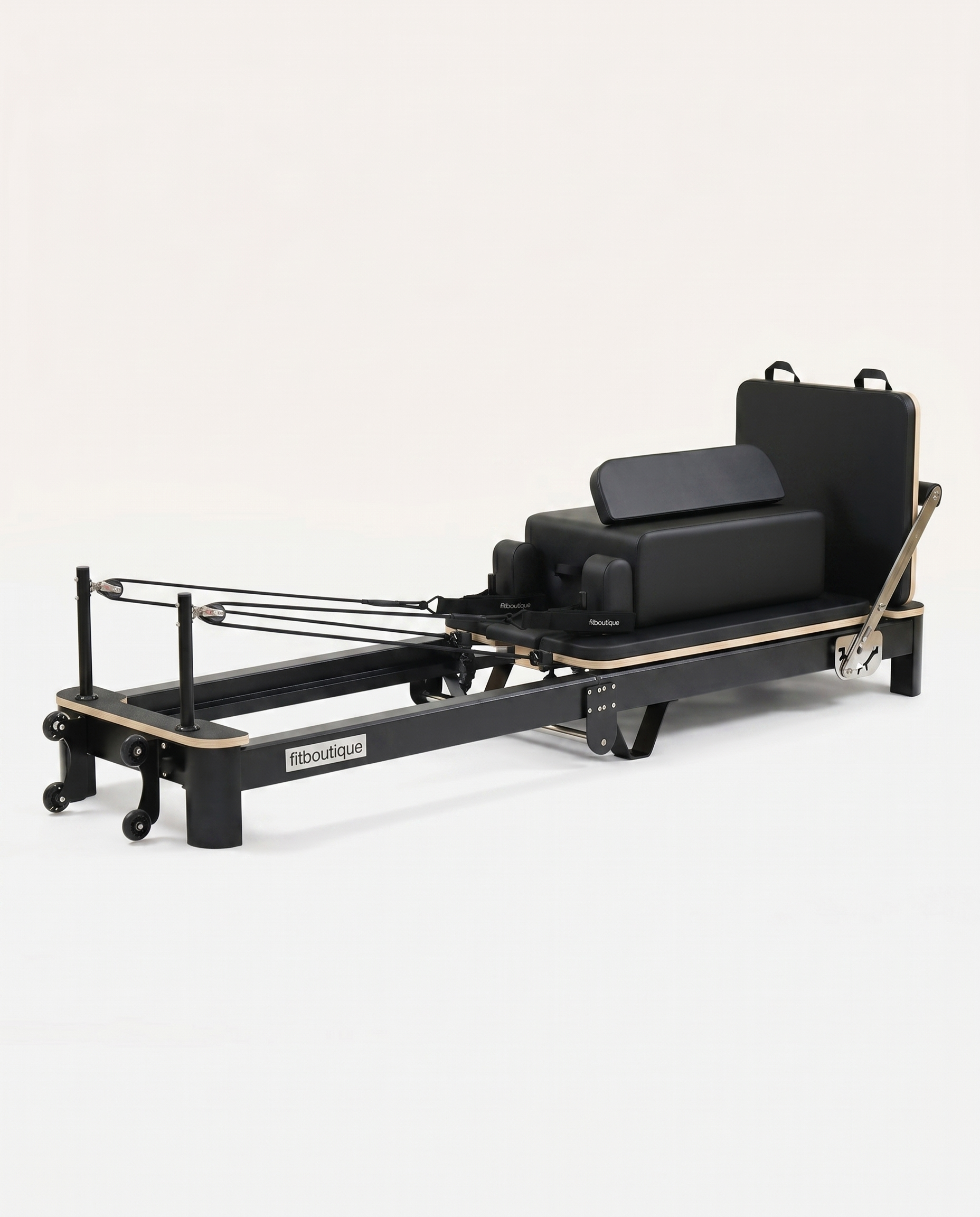
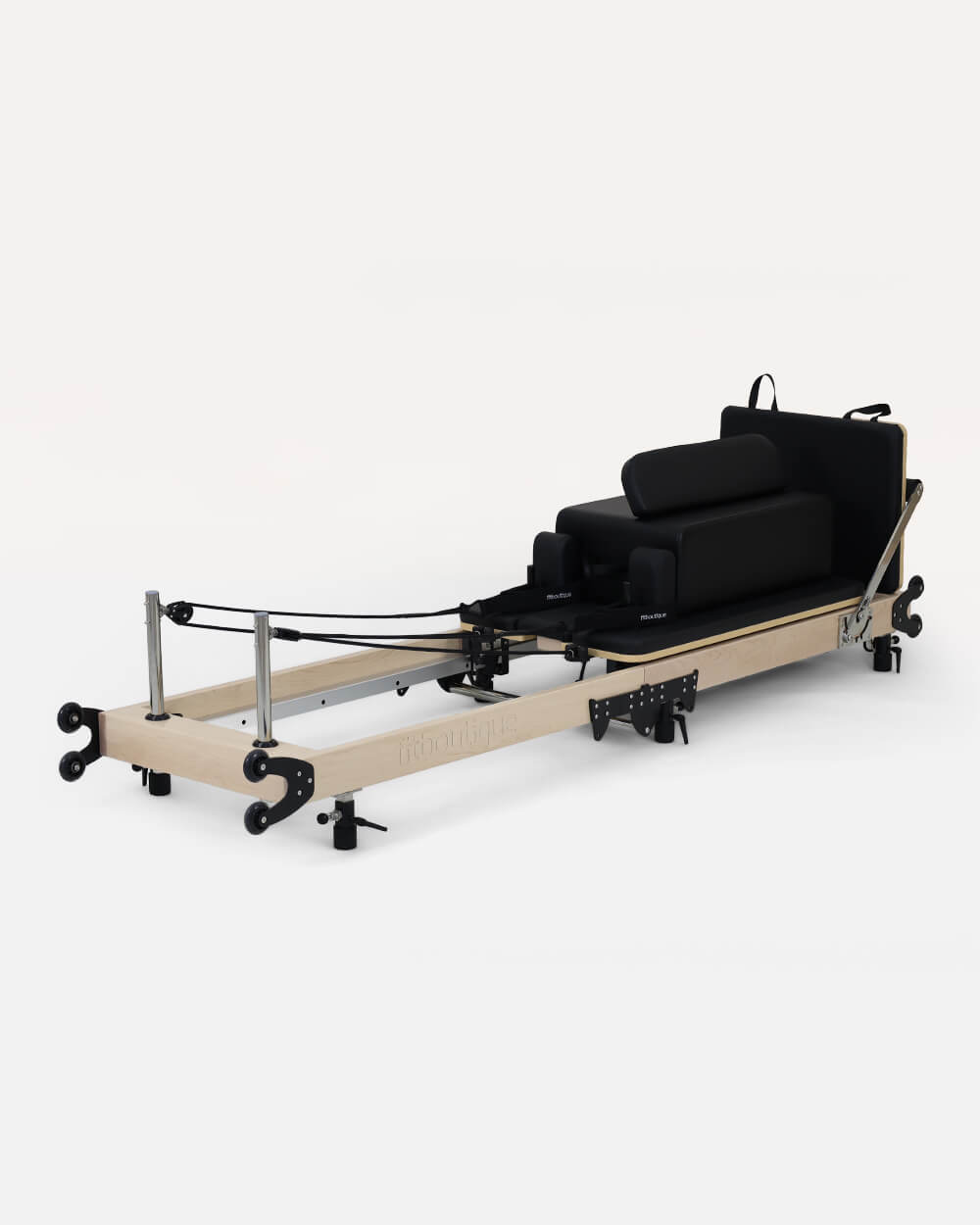
Every FitBoutique reformer arrives assembled with 6 German made springs, a jumpboard and box included, free delivery Australia wide and a 5 year warranty.
Compare Every Reformer
Written by Ayrah Yuso
I'm part of the FitBoutique team and have a solid passion (and love) for all things exercise related, including Reformer Pilates



















Leave a comment