




Why Is Reformer Pilates So Popular?
People describe reformer Pilates as addictive more than any other kind of training I have sold equipment for. Not "I enjoy it". Hooked, obsessed, cannot stop. I hear it weekly and I have felt it myself.
I got curious about why, because the usual explanations are unsatisfying. It is not the endorphins, since plenty of exercise produces those and does not produce this. It is not novelty, because people are still saying it 3 years in. Something more specific is going on, and once I worked out what I think it is, it also became clear which part of the enthusiasm is worth protecting and which part is worth watching.
Here is the honest version of both.

In this article
- The machine tells you the truth every session
- Progress you can measure without the scales
- Hard without being punishing
- You get good at it surprisingly fast
- It works on the days you cannot face anything
- How it feels afterwards, and what the research shows
- The social part, honestly
- When enthusiasm stops being useful
- How to keep it rather than chase it
- Frequently asked questions
The machine tells you the truth every session
This is the one I think actually explains it, and I have never seen it written down anywhere.
On a reformer, the carriage is a feedback device. If your stabilisers are switched on, it glides. If they are not, it shakes, or it jerks, or it slams home at the end of the movement. You do not need a mirror and you do not need an instructor to tell you. The machine tells you, instantly, every single repetition.
Almost nothing else in fitness does that. A dumbbell does not care whether you lifted it well. A treadmill measures distance, not quality. On a reformer, quality is the thing being measured, continuously, and you can feel yourself getting better inside a single session.
That is the loop. Immediate, honest, unambiguous feedback on something you are visibly improving at. Games are built on exactly that structure, which is probably not a coincidence.
Progress you can measure without the scales
The second reason is that reformer Pilates gives you a progress marker that is genuinely satisfying and completely separate from your body.
Your springs. Which combination you are using for footwork, whether you can hold an exercise on one lighter spring than you could a month ago, whether the carriage still shakes at the end of a long set. Those are objective, they change over weeks, and they have nothing to do with how you look.
That matters more than it sounds, because most exercise offers you the mirror and the scales as your only feedback, and both are slow, noisy and emotionally loaded. The springs are none of those things. You either dropped one or you did not.
The counterintuitive part, which every new person refuses to believe, is that lighter springs are harder. A lighter spring makes the carriage less stable, which means your own muscles do the stabilising. A 2024 study in the journal Healthcare measured this directly and found that lower spring resistance increased activation of the deep abdominal and spinal muscles during core exercises. So "I went down a spring" is a real achievement, and it arrives long before anything visible does.
Hard without being punishing
Reformer Pilates occupies an unusual position. It is genuinely demanding and it does not beat you up.
There is no impact. Your spine is supported for most of the repertoire. You are not jarring joints or landing on anything. And yet 10 minutes into a session your legs are shaking, which is a combination most training cannot offer.
The practical consequence is that you can do it often. Something that leaves you wrecked for 2 days gets done once or twice a week at best, and a habit that fires twice a week takes a long time to become automatic. Something you can do 3 or 4 times a week becomes part of your life much faster.
It also means it does not have an age limit or a fitness prerequisite in the way a lot of training does, which is why you see people in their 20s and people in their 70s using the same machine with the same enthusiasm.
You get good at it surprisingly fast
The first 3 weeks of reformer Pilates deliver more improvement than almost any other training you could start, and the reason is physiological rather than motivational.
Early progress in any resistance training comes from your nervous system rather than your muscles. Your brain learns to recruit more of the muscle you already have and to coordinate the muscles around a movement so they stop fighting each other. That research goes back to a 1979 study by Moritani and deVries and has been confirmed repeatedly since, and the Victorian Government summarises it plainly on the Better Health Channel: most of your initial increase in strength is neural adaptation.
Now apply that to an activity that is mostly about coordination. Reformer Pilates is the purest coordination challenge in mainstream fitness, so the neural phase delivers a lot, and it delivers it where you can feel it. Week 1 is chaos. Week 3 you are doing the same exercise on purpose. That gap is enormous and you experience all of it.
I wrote up what changes and when in what changes first, week by week.

It works on the days you cannot face anything
This is the quiet reason people stay, and I think it is underrated.
Most training has one setting. A run is a run. If you cannot face a run today, you do nothing, and the streak breaks, and breaking a streak is how habits die.
A reformer has a low gear. Twenty minutes, light springs, slow tempo, mobility work. You finish feeling better than when you started rather than more tired. It is not a compromised session, it is a different legitimate session, and crucially it keeps the habit intact on the days that would otherwise be zeros.
That flexibility is a large part of why it sticks, and it is also the thing that lets people train 4 or 5 days a week without accumulating damage, provided they actually use the low gear rather than doing 5 hard sessions.
How it feels afterwards, and what the research shows
Almost everyone reports a particular mental state after a session. Calm, but alert. Not the wrung out feeling after hard cardio and not the buzz after lifting. Something more settled.
My explanation is attention. Reformer work demands so much concentration, breath, alignment, spring pressure, where your ribs are, that there is genuinely no spare capacity left for anything else. Forty minutes where your brain cannot wander is unusual in a normal week, and I think that accounts for more of the effect than any hormone does.
On the research, I want to be accurate rather than flattering. A 2026 systematic review and meta analysis in the journal Sports pooled 32 trials covering 1,264 participants and found significant improvements in quality of life and self esteem, with older adults showing the largest effects. What it did not find was strong evidence on depression and anxiety, where the authors describe the evidence as limited or non significant, and they note very high variation between studies.
So the honest summary is that the research supports Pilates making people feel better about themselves and their lives. It does not currently establish it as a treatment for anxiety or depression, and anyone who tells you otherwise is overselling. If you are dealing with either, this is a nice thing to add to your week rather than a substitute for proper support.
The social part, honestly
Group classes create a real sense of belonging, and that is part of why studio Pilates spreads by word of mouth rather than advertising.
But I should be straight about this, because I sell home machines. Training at home you lose that, and it is a genuine loss. What you get instead is frequency, because a session is 40 minutes door to door with no door, and frequency is what actually produces results.
Most people I know who love this have landed on a mix. A class every week or 2 for the correction and the company, home sessions for volume. If you are choosing between studio and home, that combination is better than either purely.
When enthusiasm stops being useful
Everything above is the good version. Here is the part most articles about this leave out, and I would rather write it than pretend.
The failure mode of loving reformer Pilates is not injury. It is drift. What happens is that the streak becomes the point rather than the training, and once that flips, quality quietly falls apart. Sessions get shorter. Springs get lighter without a decision being made. The exercises you dislike disappear from the routine. You are still training 6 days a week and doing less work than you did at 3, and you do not notice because the streak is intact and the streak is what you are watching.
The physical warning signs are small and specific. Grip and forearm fatigue that never clears. Sore feet from the footbar. Soreness in one place lasting more than 3 days. Sleep getting worse rather than better. The small structures complain long before anything serious does.
The honest check is this. Write down your springs and your session length once a fortnight. If both have quietly drifted downwards over a month, cut back to 3 or 4 proper sessions rather than adding more. Muscle is built during recovery, not during training, so more is not automatically better.
And a note I will keep brief. If missing a session produces real anxiety, or if training has started to feel like something you owe rather than something you chose, that is worth taking seriously and worth talking to someone about. Enjoying exercise and feeling compelled by it are different things, and the difference matters.
How to keep it rather than chase it
- Train 3 or 4 times a week, not 7. The frequency research consistently shows twice a week beats once for building muscle, with diminishing returns after 3 or 4. Every day is not faster.
- Use the low gear deliberately. Three full sessions and 1 or 2 light ones is a better week than 5 medium ones. A light session should leave you feeling better than when you started.
- Keep your exercises the same for 3 or 4 weeks. Progress comes from getting better at the same movements, not from constant novelty. Changing everything weekly feels productive and mostly manufactures soreness.
- Track springs, not the scales. It is the honest measure, it is emotionally neutral, and it keeps you focused on the thing that is actually improving.
- Take a full day off between hard sessions. Muscle protein synthesis stays elevated for well over a day after a session. The rest day is part of the work.
- Get corrected occasionally. A handful of instructed sessions a year catches habits before they set. This is the one thing a machine at home cannot give you.
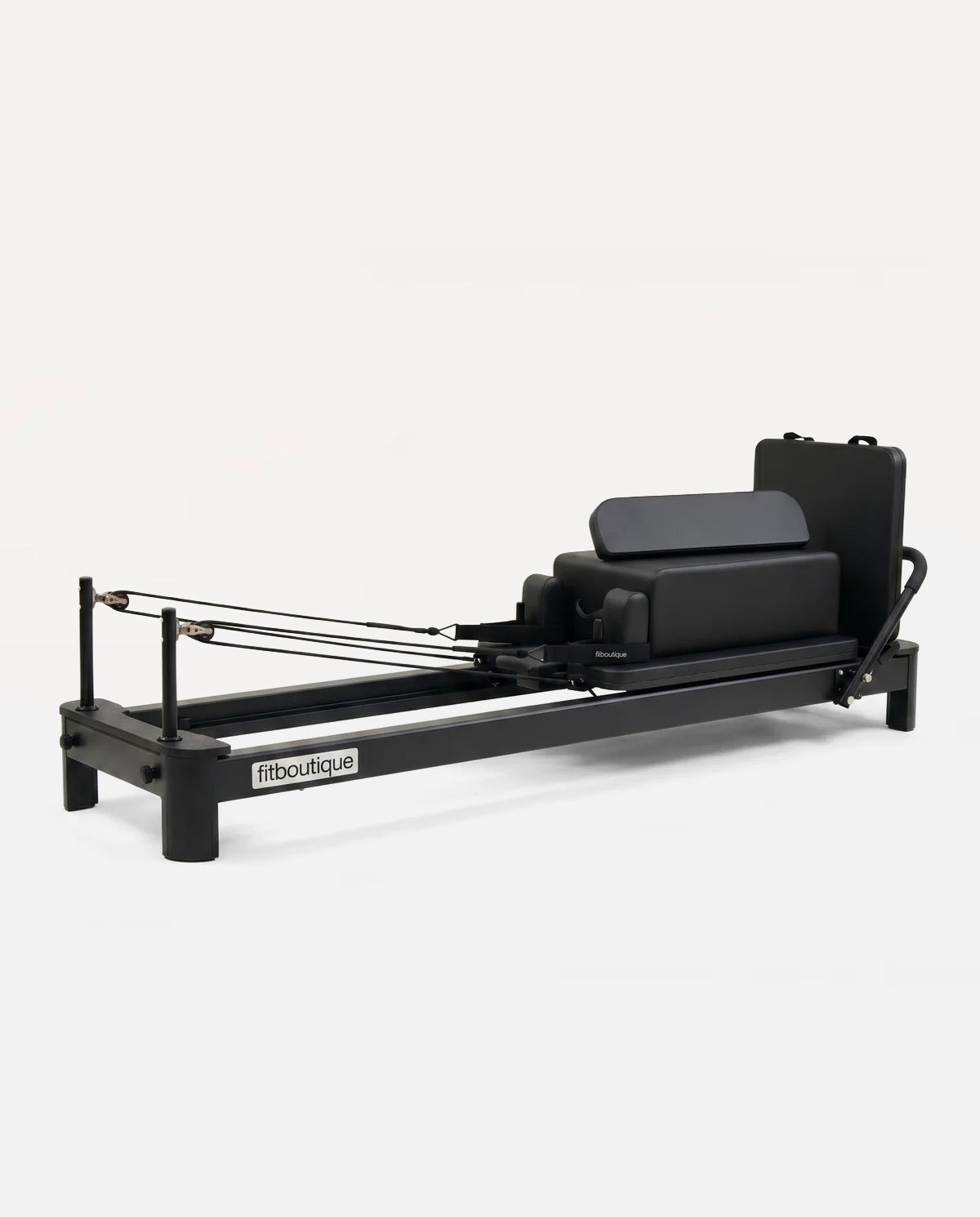
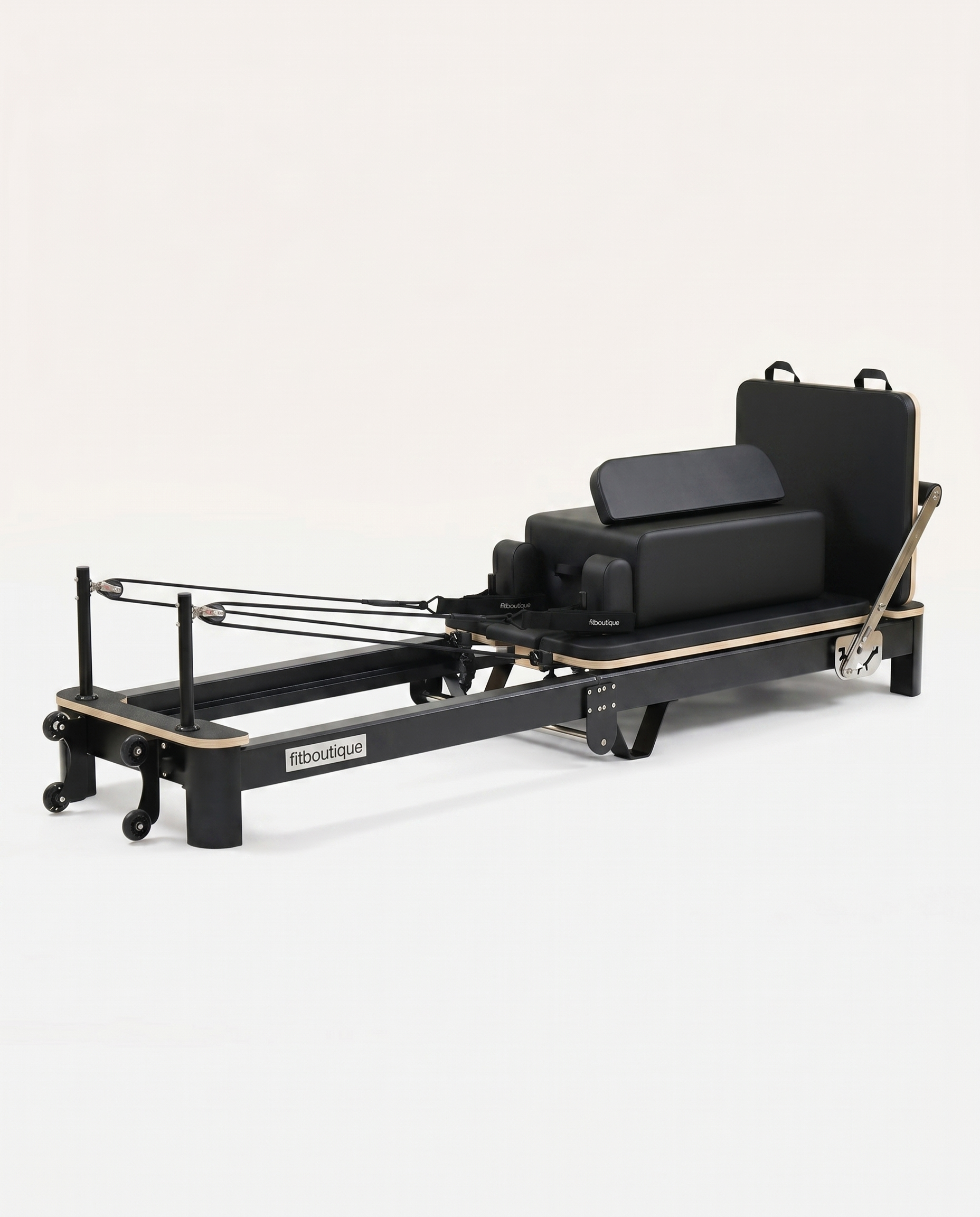
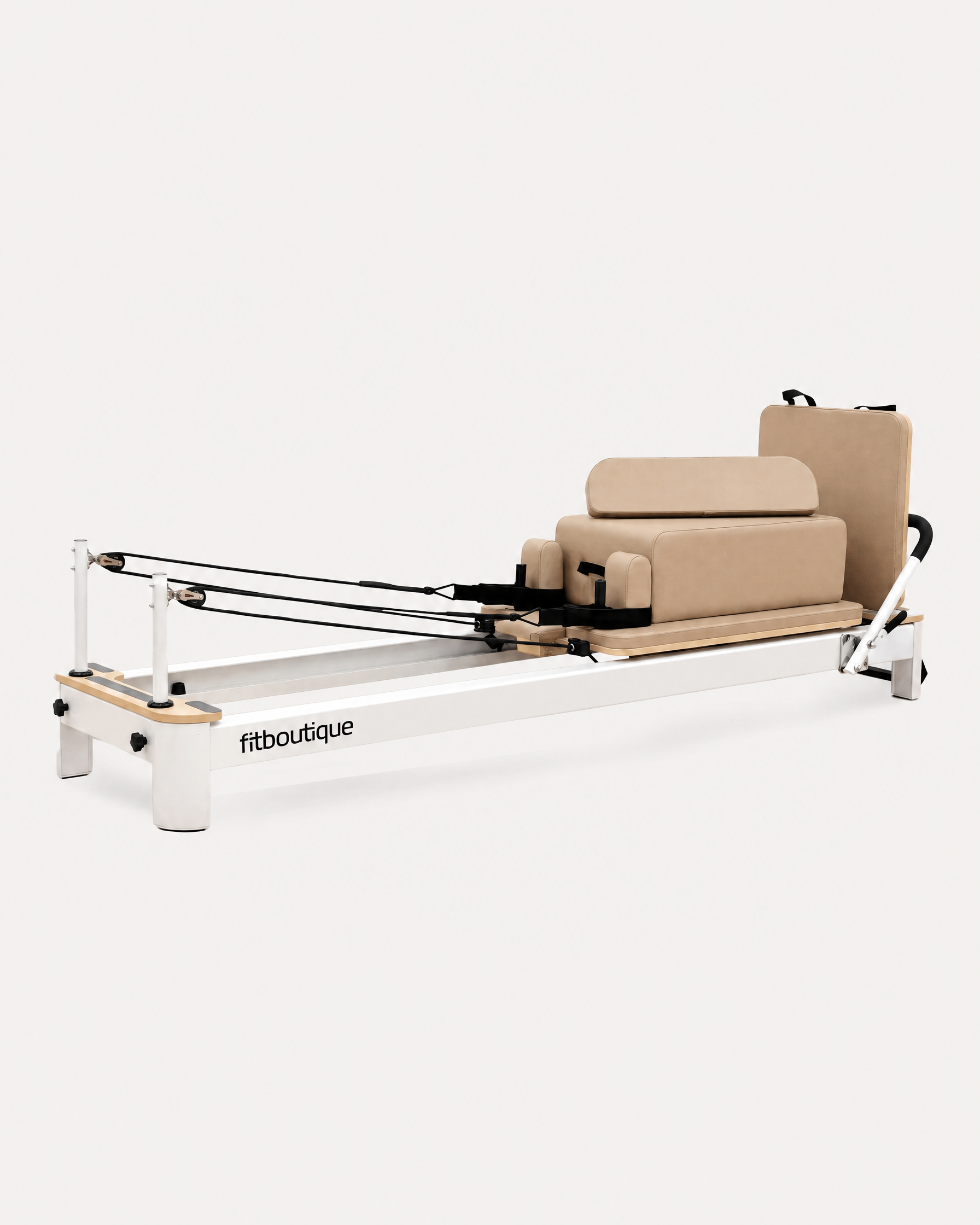
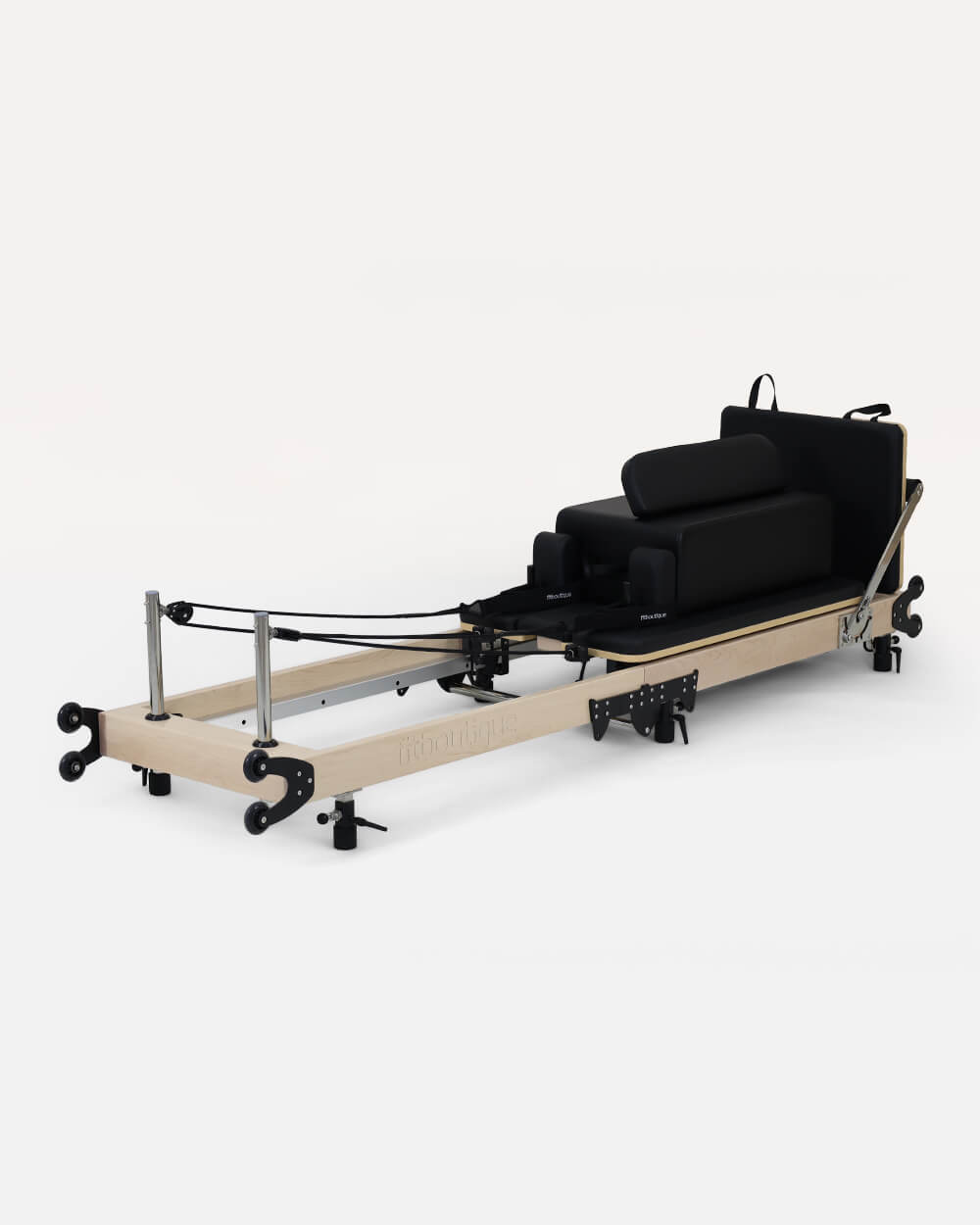
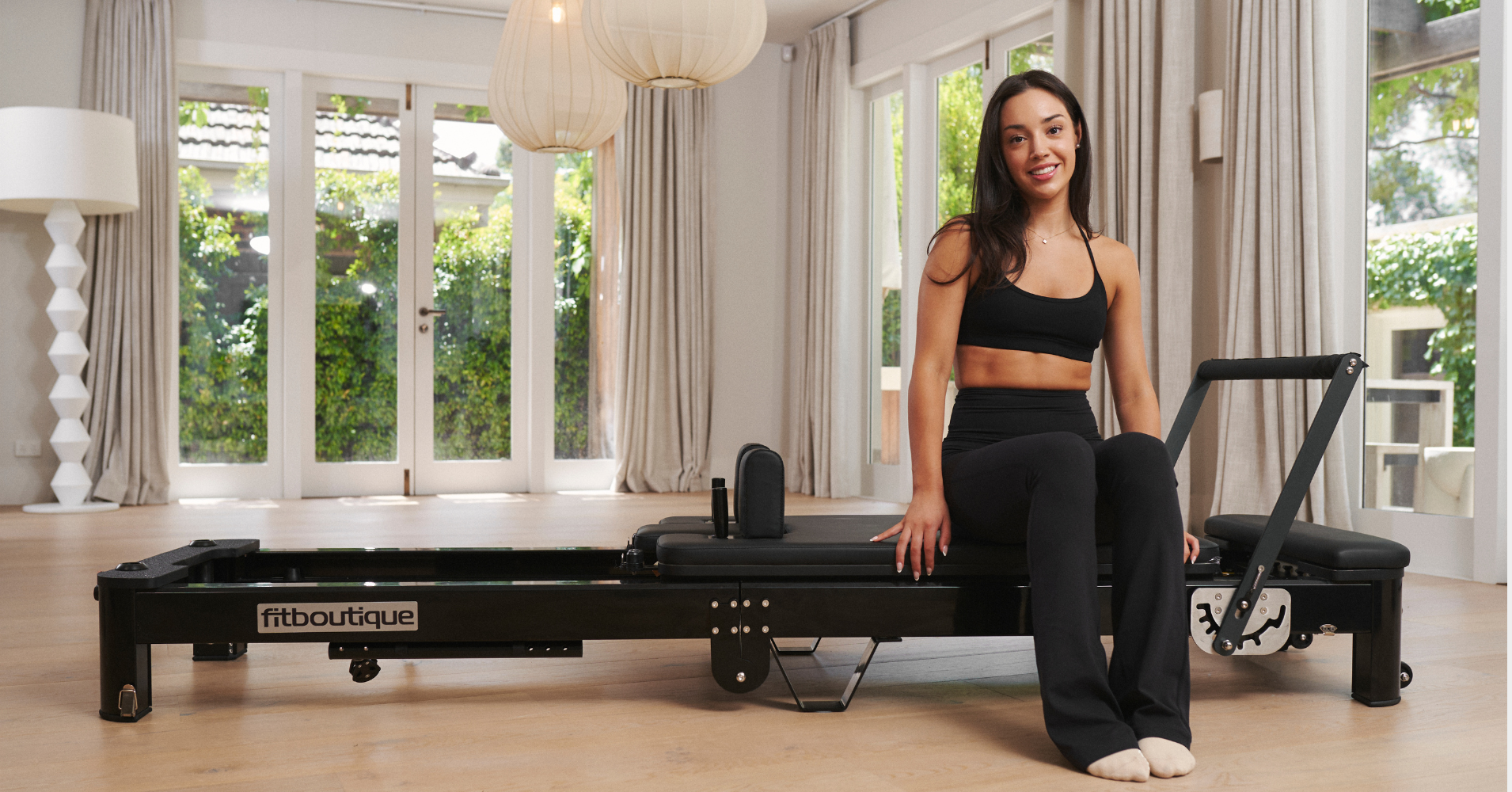
For what it is worth, I train on an Onyx Fold Reformer at home, and the reason I have kept it up for years is not discipline. It is that the machine is 10 metres from the kettle. A pair of grip socks is the only other thing I would call essential.
A Note From Ayrah
The moment I understood why this is habit forming had nothing to do with fitness.
I was about 5 months in, doing long stretch, and the carriage went completely silent. Not quieter. Silent, and perfectly even, out and back. I had done that exercise probably 200 times and it had always had a small wobble at the end of the range that I had stopped noticing because it had always been there.
I stopped and did it again to check I had not imagined it. Silent again.
Nobody saw it. There was no number attached to it and no photo worth taking. But I knew exactly what it meant, which was that something in my body had reorganised itself quietly over 5 months of showing up, and the machine had just told me.
That is the hook. Not the way you look, not the calories. It is that a reformer gives you unambiguous evidence of your own progress on a timescale where you can still feel the change. Very little in adult life does that, which is why people who find it tend to keep it.
Frequently Asked Questions
Why is reformer Pilates so popular?
Mostly because the machine gives you immediate, honest feedback. The carriage glides when your stabilisers are working and shakes when they are not, so you can feel yourself improving within a single session. Add fast early progress, a measurable marker in the springs that has nothing to do with the scales, and a workload you can repeat 3 or 4 times a week without being wrecked, and it becomes something people keep doing.
Why does reformer Pilates feel addictive?
Because it has a tight feedback loop. Immediate, unambiguous information about how well you are moving, on something you are visibly getting better at. That structure is genuinely compelling, and for most people it produces a healthy habit. It is worth keeping an eye on the difference between enjoying a session and feeling you owe it.
Why do people get hooked so quickly?
The first few weeks deliver more improvement than almost any other training you could start, because early gains in any resistance training come from the nervous system learning to recruit and coordinate muscle rather than from the muscle growing. Reformer work is mostly a coordination challenge, so that phase pays off fast and you feel all of it.
Does reformer Pilates improve mental health?
A 2026 systematic review pooling 32 trials and 1,264 participants found significant improvements in quality of life and self esteem, with the largest effects in older adults. It did not find strong evidence for effects on depression or anxiety, describing that evidence as limited. So it reliably makes people feel better about themselves, and it is not established as a treatment for either condition.
Why do lighter springs feel harder?
A lighter spring makes the carriage less stable, so your own muscles do the stabilising instead of the spring doing it for you. A 2024 study measuring muscle activity on a reformer found lower spring resistance increased activation of the deep abdominal and spinal muscles. Being able to drop a spring is a real progress marker.
Can you do too much reformer Pilates?
Yes, though it rarely looks dramatic. The usual pattern is drift rather than injury: sessions get shorter, springs get lighter, disliked exercises disappear, and you end up doing less work than you did at 3 sessions a week while feeling more tired. Grip fatigue, sore feet and worsening sleep are the early signals.
How often should I do it?
Three or 4 times a week for most people, with a rest day between the hard ones. Muscle is built during recovery rather than during training, and the frequency research shows diminishing returns past 3 or 4 sessions. If you want to move daily, make 1 or 2 of those a genuinely light session.
Is it better at a studio or at home?
A mix, if you can. A studio gives you correction and the social side, which a machine at home cannot. Home gives you frequency, because a session takes 40 minutes with no travel, and frequency is what produces results. Most people who stick with it long term use both.
Ten Metres From The Kettle
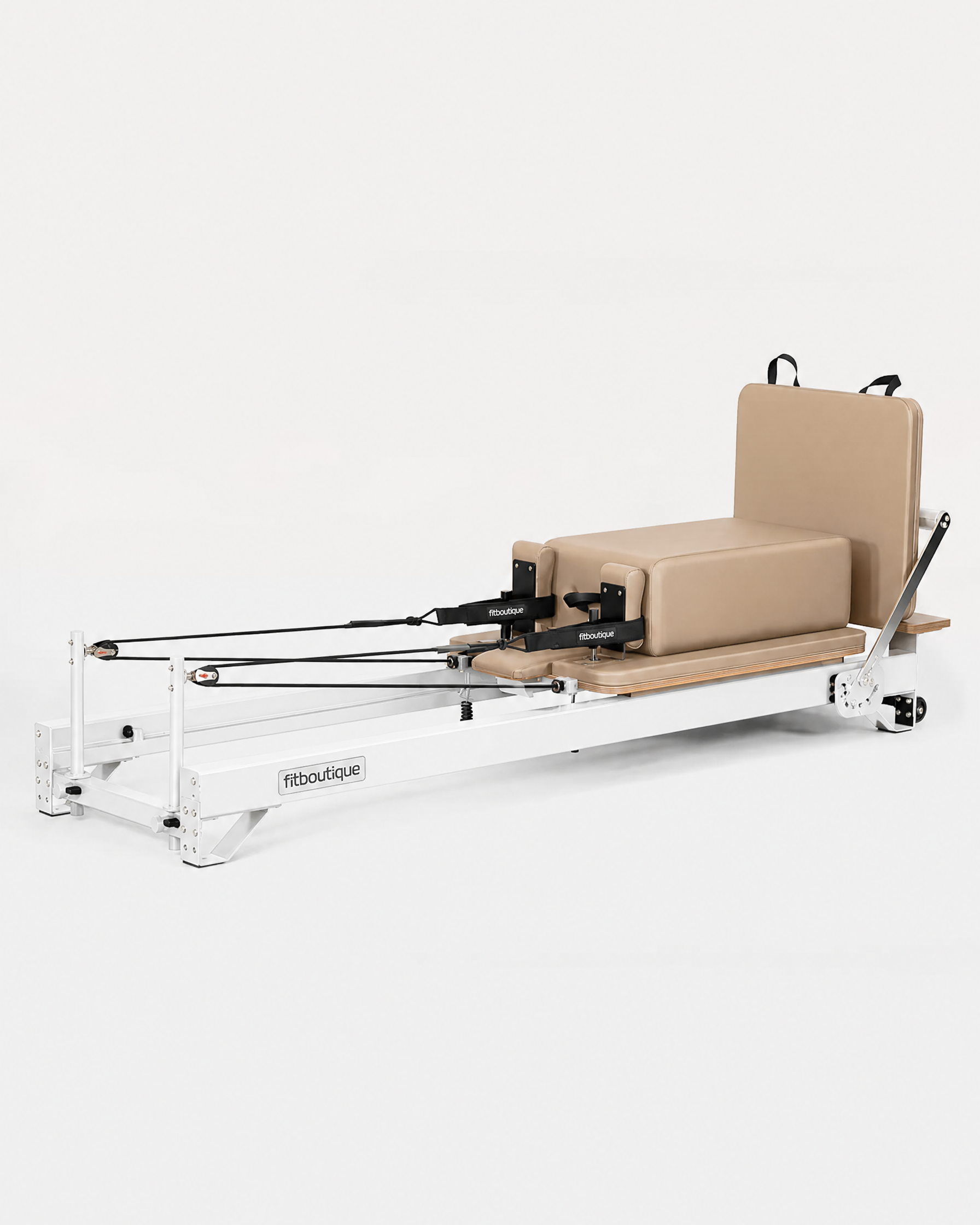
Commercial grade reformers that arrive fully assembled with German made springs, a jumpboard and box included, free delivery Australia wide and a 5 year warranty.
Compare Every Reformer
Written by Ayrah Yuso
I'm part of the FitBoutique team and have a solid passion (and love) for all things exercise related, including Reformer Pilates

















Leave a comment